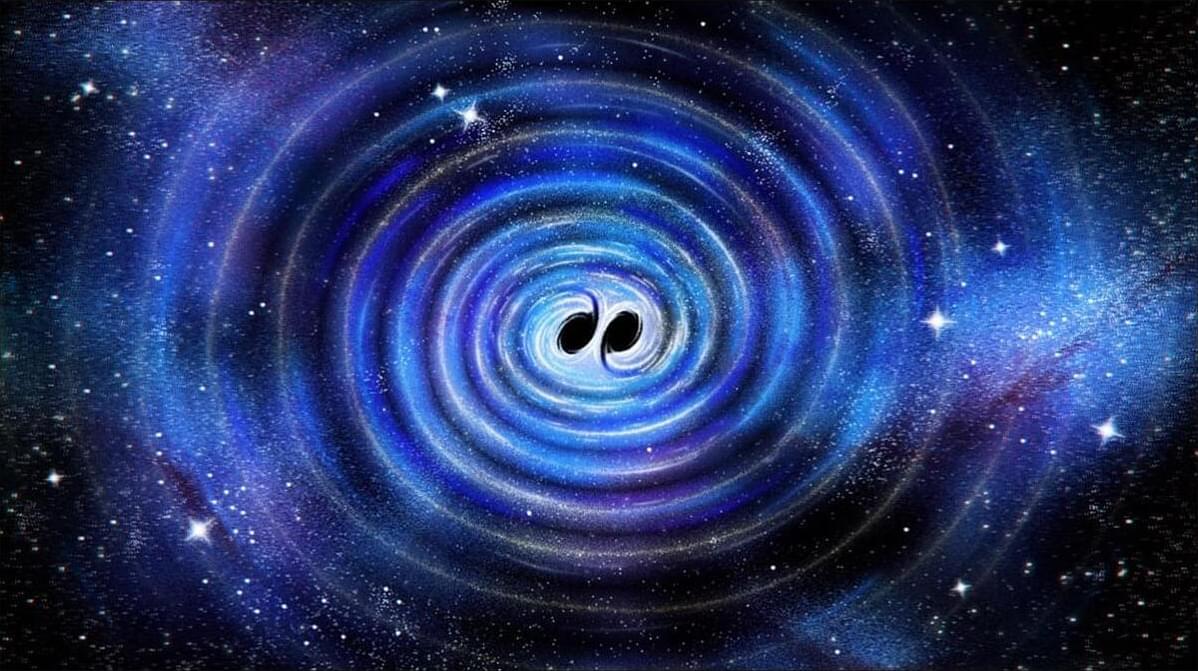
A new method maps the subtle gravitational wave vibrations produced by merging black holes, potentially enabling more precise tests of general relativity.
When two black holes collide, the violence of the merger does not end immediately. The newly formed, larger black hole continues to ‘ring’ as it settles into a stable shape, and researchers have developed a new way to analyze those vibrations in greater detail.
Unlike a bell or guitar string, a black hole does not produce sound. Instead, it sends out gravitational waves, ripples in spacetime first predicted by Albert Einstein.