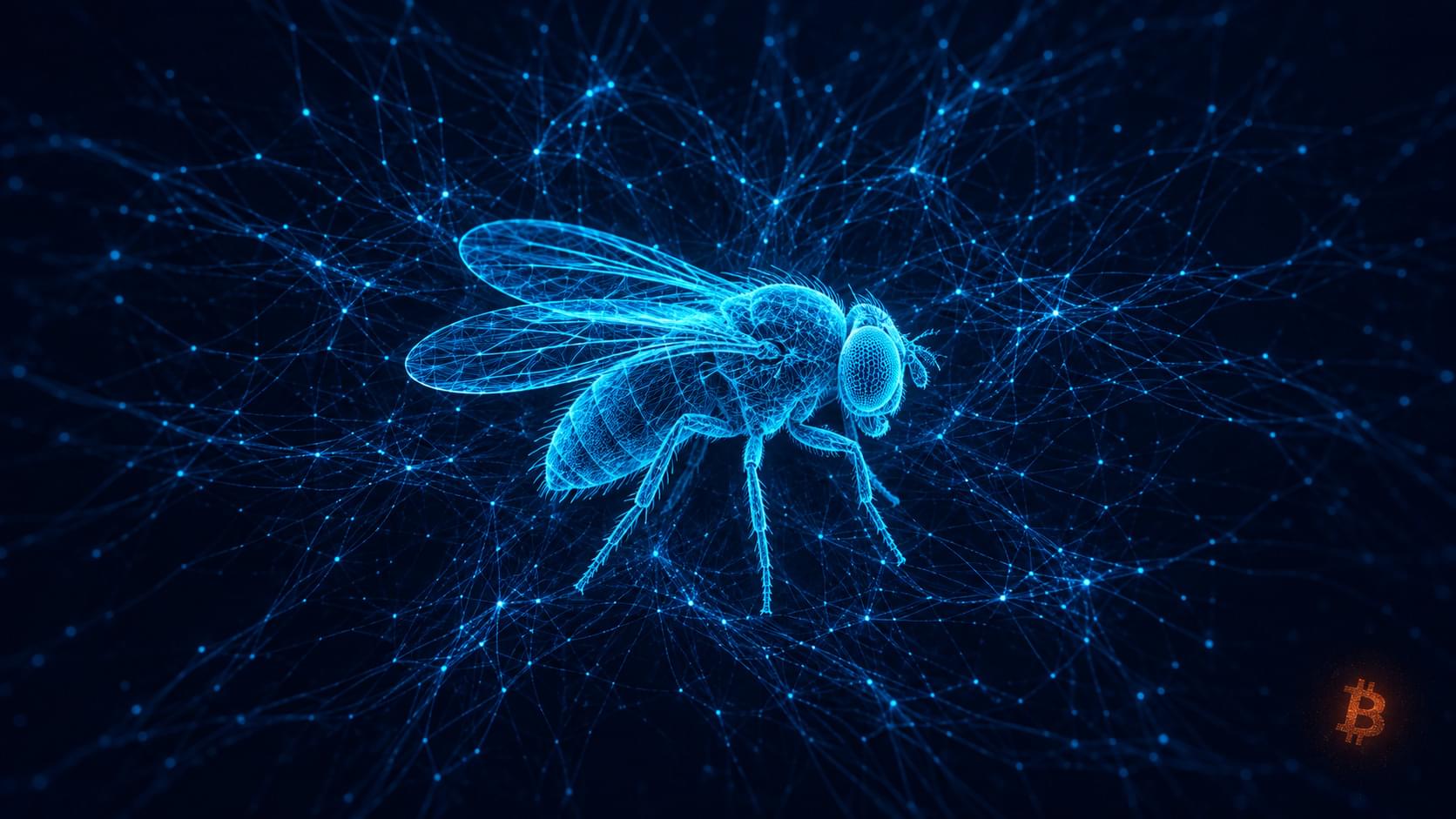
A Coinbase engineer wired a full brain connectome simulation of a male fruit fly into a live Bitcoin trading account. The project, called Stonkfly, contains 166,700 neurons and 25.6 million connections, and its own documentation admits it has demonstrated no profitable learning. That admission is the point. Brain connectome simulation is not another reinforcement learning pipeline — it is a structurally different approach that trades learning for inherited architecture, and a parallel project is already wiring the same fly brain to a physical robot.
Brain connectome simulation crossed from neuroscience labs into consumer-facing experiments this month, and the way it happened matters more than the crypto stunt. Stonkfly, created by Coinbase software engineer Alex Wormuth, gave a simulated fruit fly nervous system $100 to trade Bitcoin. The fly does not receive prices. It receives a candlestick chart rendered as RGB pixels through simulated photoreceptors, and its neural activity is decoded into buy, sell, or hold.
Profit stimulates 15 identified dopamine neurons. Loss stimulates two aversive dopamine cells. The fly cannot use leverage or shorts, bets a maximum of $10 per order, and makes at most 24 attempts per day.