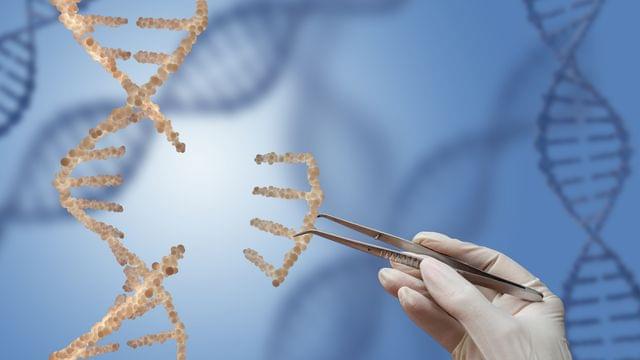
Investigators from Mass General Brigham and Beth Israel Deaconess Medical Center have developed STITCHR, a new gene editing tool that can insert therapeutic genes into specific locations without causing unwanted mutations. The system can be formulated completely as RNA, dramatically simplifying delivery logistics compared to traditional systems that use both RNA and DNA. By inserting an entire gene, the tool offers a one-and-done approach that overcomes hurdles from CRISPR gene editing technology—which is programmed to correct individual mutations—offering a promising step forward for gene therapy. Results are published in Nature.
“CRISPR has revolutionized how we think about gene editing, but it has limitations. CRISPR can’t target every location in the genome, and it can’t fix the thousands of mutations present in diseases like cystic fibrosis,” said co-senior author Omar Abudayyeh, PhD, an investigator at the Gene and Cell Therapy Institute (GCTI) at Mass General Brigham and Engineering in Medicine Division in the Department of Medicine at Brigham and Women’s Hospital (BWH). “When we started our lab, one of the big things we wanted to figure out was how to insert large pieces of genes, or even entire genes, to replace faulty ones. This would allow us to target every mutation for a disease with a single gene editing construct.”
STITCHR harnesses the power of enzymes from genetic elements called retrotransposons, which are found in all eukaryotic cells, including animals, fungi, and plants. They are often called “jumping genes” for their tendency to move around and insert themselves into the genome. The researchers recognized how the copy-and-paste mechanism they use to move could be repurposed to edit genes at specific locations.