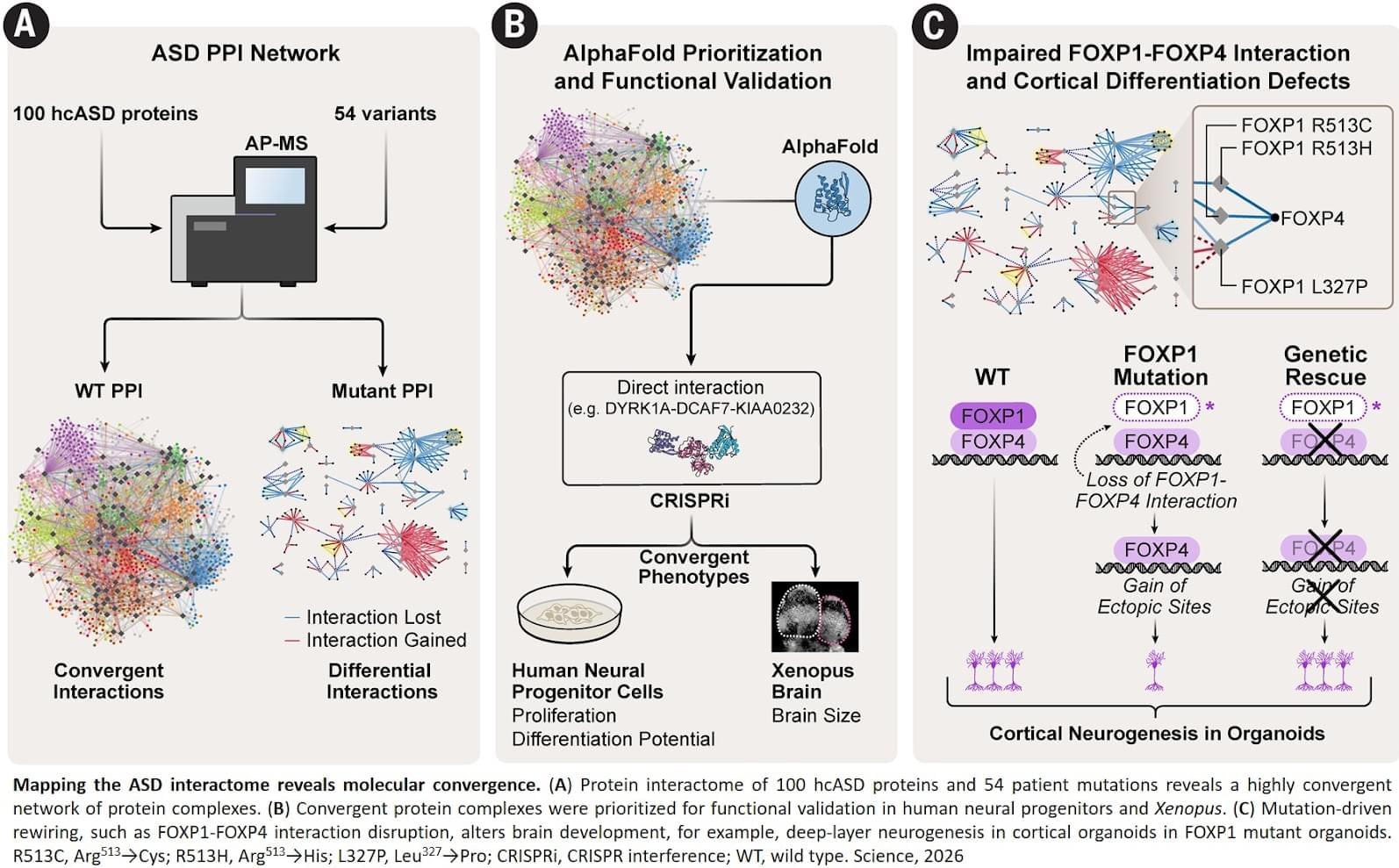
For more than two decades, researchers have identified hundreds of genes that increase the risk of autism spectrum disorder (ASD). Yet multiple fundamental questions have remained unanswered: among them, how do mutations in these genes lead directly to changes in brain development and how can that knowledge be translated into more effective therapies?
In a landmark study published in Science, scientists have taken a major step toward answering both questions. The findings are the result of more than a decade of work. By building the largest-ever molecular interaction map of autism, the team revealed how hundreds of genes and dozens of mutations converge within a surprisingly small number of shared protein networks, hurdling a major roadblock to the development of new precision medicines.
Rather than focusing only on the genes linked to autism, the researchers mapped the proteins encoded by those genes and discovered exactly how individual disease-causing mutations can rewire the molecular machinery of the developing brain. The work uncovers an entirely new layer of disease biology that can be targeted therapeutically and provides a framework for designing medicines that directly address a wide range of underlying molecular causes of autism.