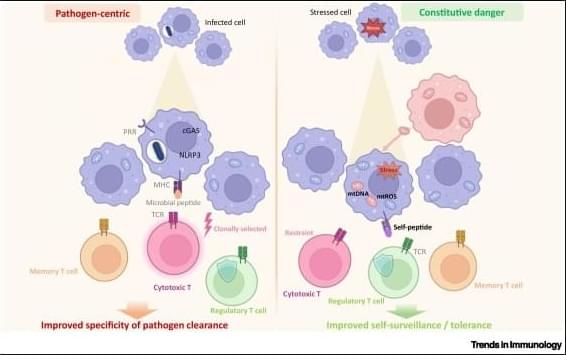
The adaptive immune system (AIS) is traditionally viewed as a defensive vertebrate innovation forged by pathogen pressure. Yet many of its core features suggest it is a homeostatic, regulatory circuit, not simply a sophisticated means of antimicrobial warfare. The horizontal transfer of mitochondria—–endogenous endosymbiotic organelles—is a conserved mechanism for maintaining tissue homeostasis through metabolic rescue but can alter a cell’s identity and provoke immune responses. We propose that escalating multicellular complexity accommodated mitochondrial mobility—and the inevitable intrinsic immunological danger it presents—through a complementary supervisory system with buffering (tolerance), contextualization (specificity), memory, and eliminatory capacities.