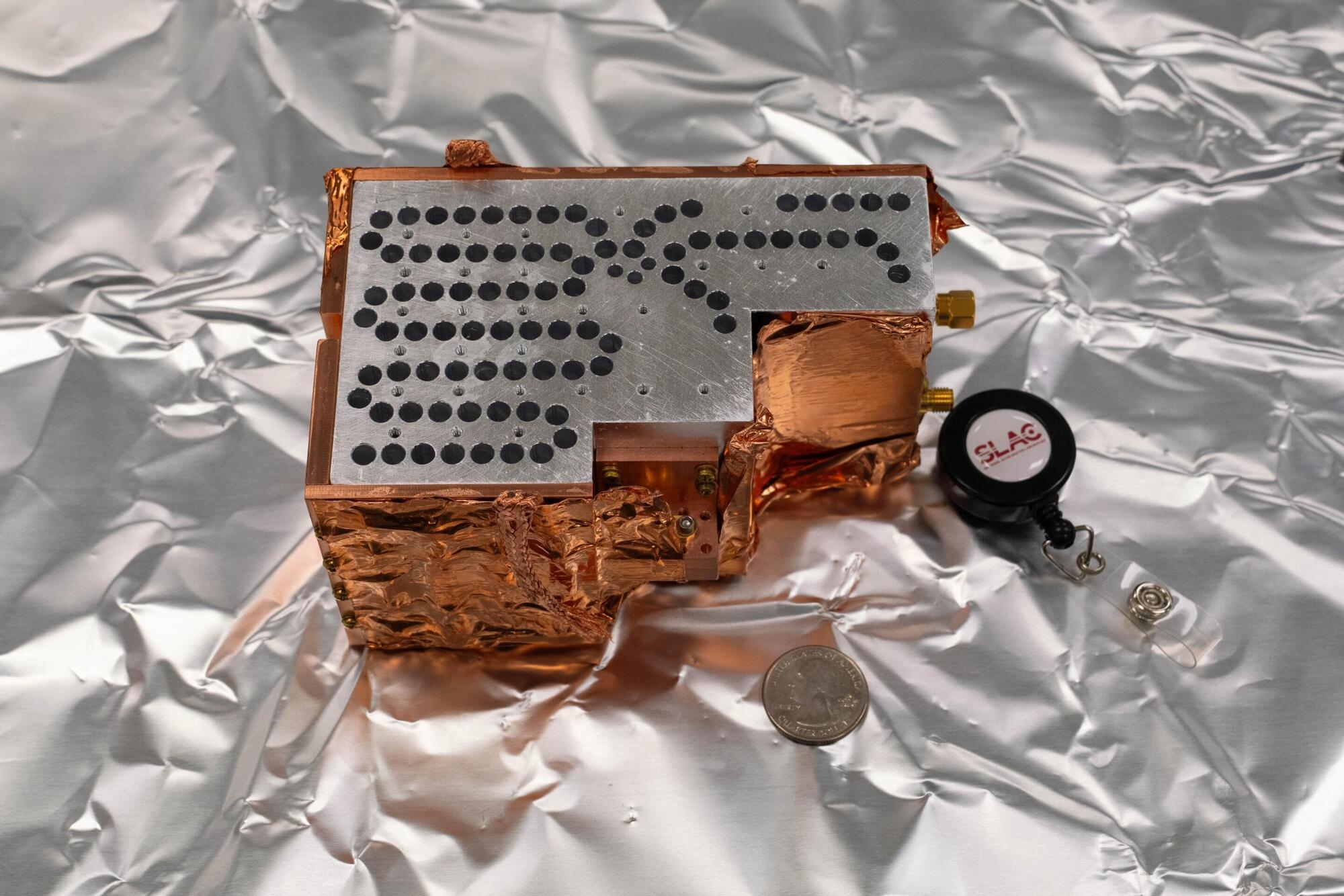
Classical computers can temporarily store the information required to perform specific tasks in a short-term memory component known as RAM (random access memory). This component allows computer processors to retrieve information from a chosen location without searching through all stored data.
Yet most current superconductor-based quantum computers do not have a separate RAM-like component. This is because while processors and memory components are separate in classical computers, most superconducting quantum computers rely on the same hardware for storing and processing information.
Researchers at Stanford University, University of Chicago, the SLAC National Accelerator Laboratory and other institutions have designed a new device that could serve as a random access quantum memory. Their device, presented in a paper published in Nature Physics, could pave the way for quantum computers with separate memory components and fewer signal-carrying connections.