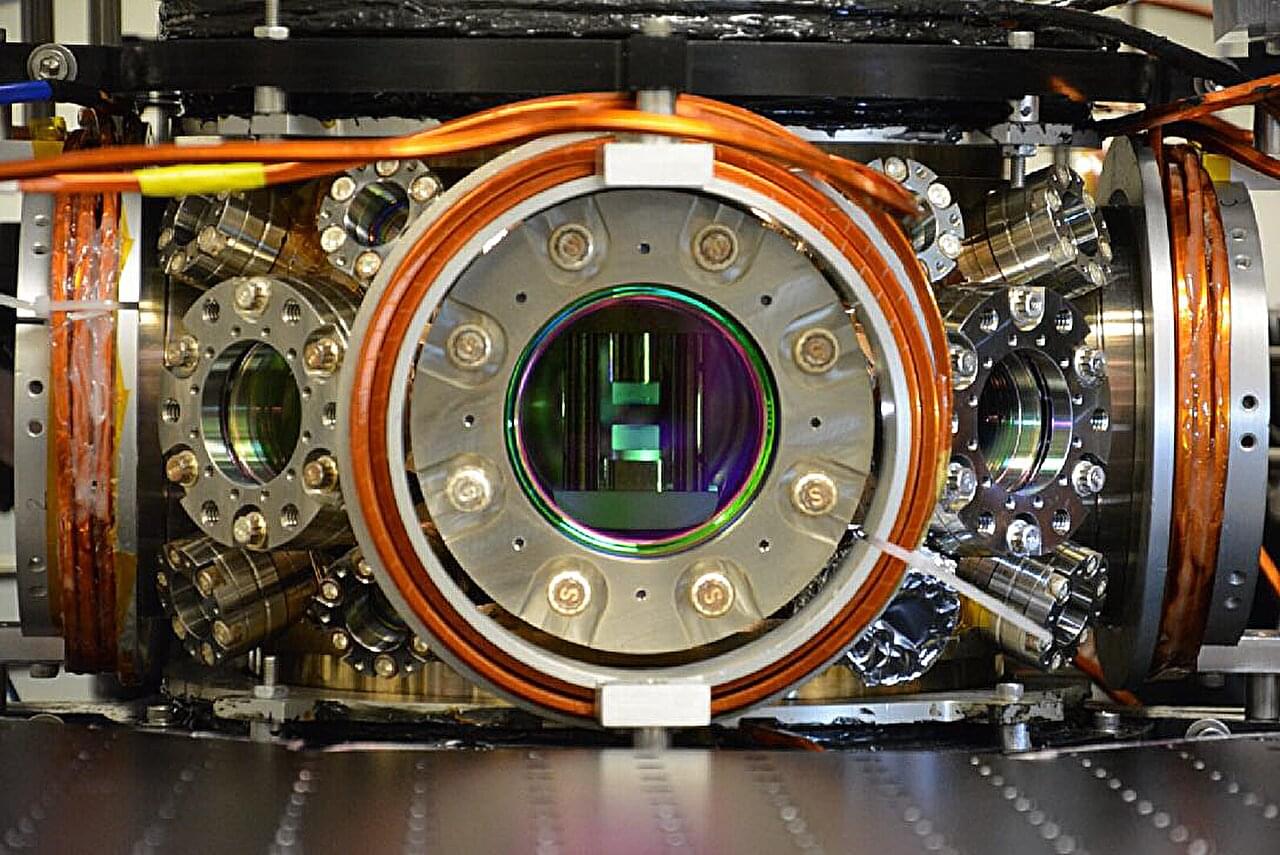
A new study has demonstrated that it is possible to make a network of atoms and photons that could improve how artificial intelligence stores and recalls memories. This network, called a quantum-optical spin glass, works as an associative memory, a form of AI that enables the recall of full memories from partial information—much like how humans can recognize a person’s face in a blurred photograph.
The advance, published in Science, shows that this new type of spin glass has a greater capacity to hold and recall memories than a traditional AI network of the same size. The atom-and-photon network also exhibited short-term plasticity, a phenomenon that resembles how synaptic connections between neurons in the brain change when learning new information.
“We can now make neural networks at the atomic level, and they adjust themselves in a way that is somewhat similar to how we believe our brains learn,” said Benjamin Lev, the study’s senior author and the Stanford Fortitude Professor and professor of physics and applied physics in the School of Humanities and Sciences.