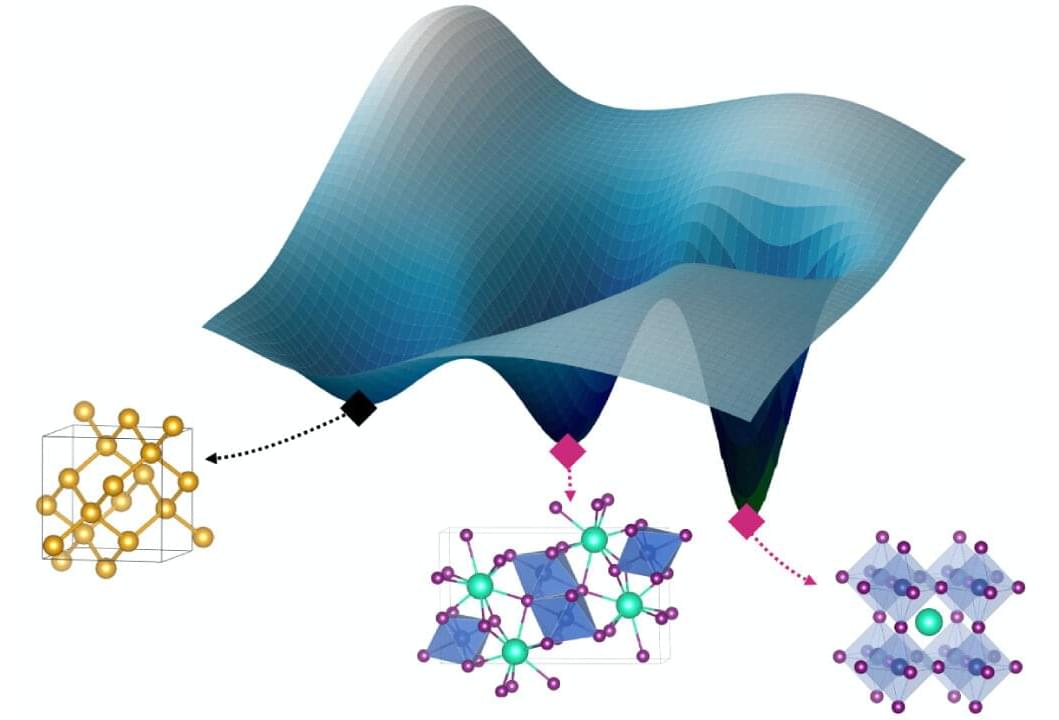
Material properties such as sound insulation, resistance to extreme heat and thermal expansion originate from how the zillions of microscopic building blocks (nuclei and electrons) interact at equilibrium and respond to perturbations. Atoms are typically about one ten-billionth of a meter across, so there can be a lot of parts to keep track of—a task that is complicated at the quantum-mechanical level, where particles are neither here nor there until observed.
In recent years, researchers have turned to machine learning (ML) to overcome the challenges of tracking countless quantum particles while connecting these atomic-level details to observable physical properties. Models abound, but can they be trusted?
In a new paper published in Nature Communications, Michele Simoncelli, assistant professor of applied physics at Columbia, sets a benchmark for evaluating ML models that aim to predict the thermal and mechanical properties of different materials.