Quantum computers promise to tackle problems that are extraordinarily difficult for today’s computers. But there is a major obstacle: quantum systems are notoriously fragile. Noise, loss and even tiny disturbances can destroy the delicate behavior that gives them their power. Building systems with many quantum particles is also extremely challenging.
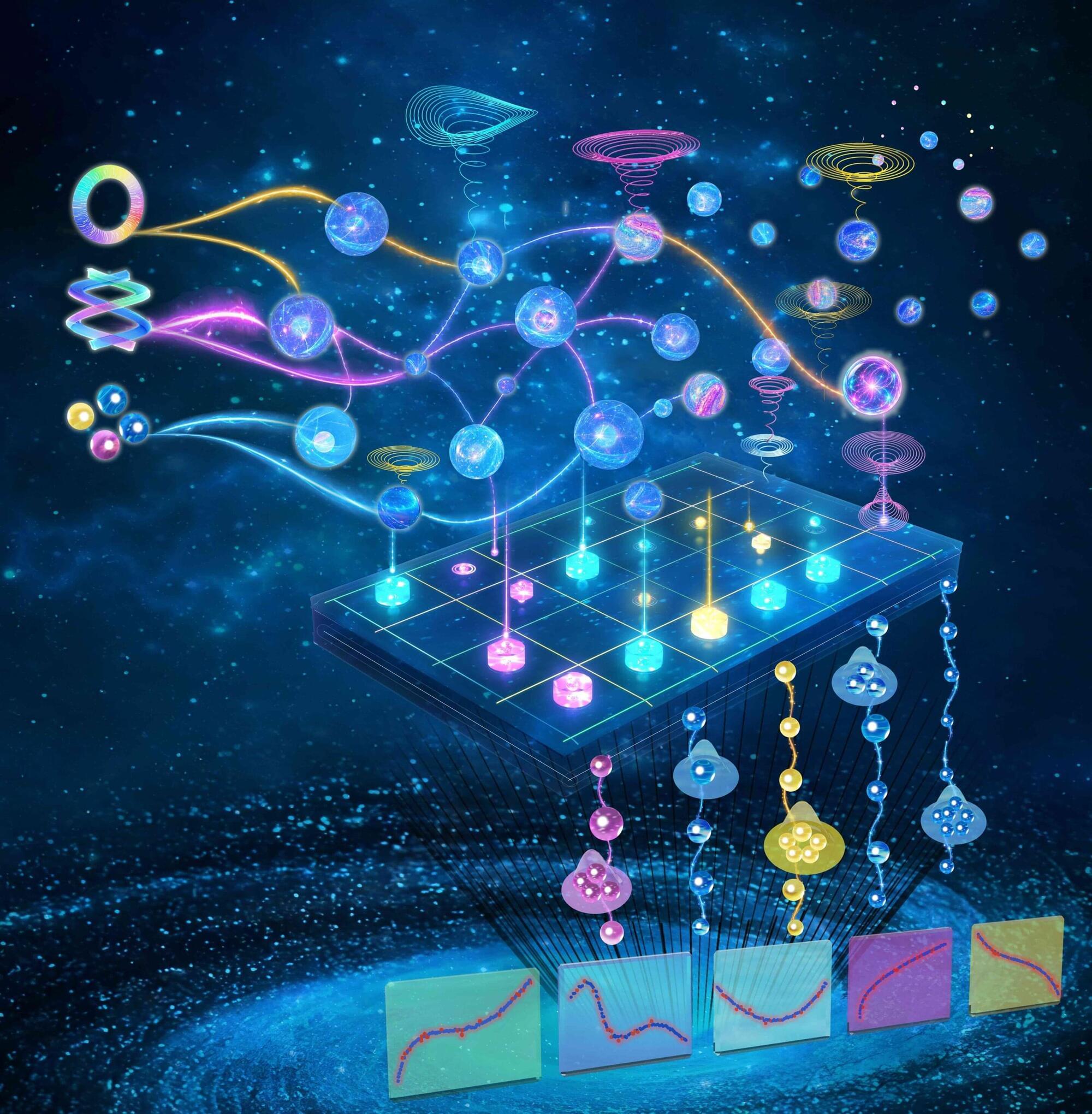
Now, physicists at Louisiana State University have demonstrated a different route. Instead of starting with a fragile source of quantum light, the team begins with bright, readily available classical light and uses an optical network together with measurements that count photons one by one. This combination reveals and uses hidden multiphoton quantum behavior for information processing.
In a study published in Advanced Science, researchers in LSU’s Department of Physics & Astronomy report the first robust multiphoton quantum reservoir of its kind to operate at room temperature while tolerating substantial noise and loss. The platform accesses multiparticle systems with up to 40 photons, simulates complex quantum dynamics, and uses the same optical machine to learn several very different mathematical functions.