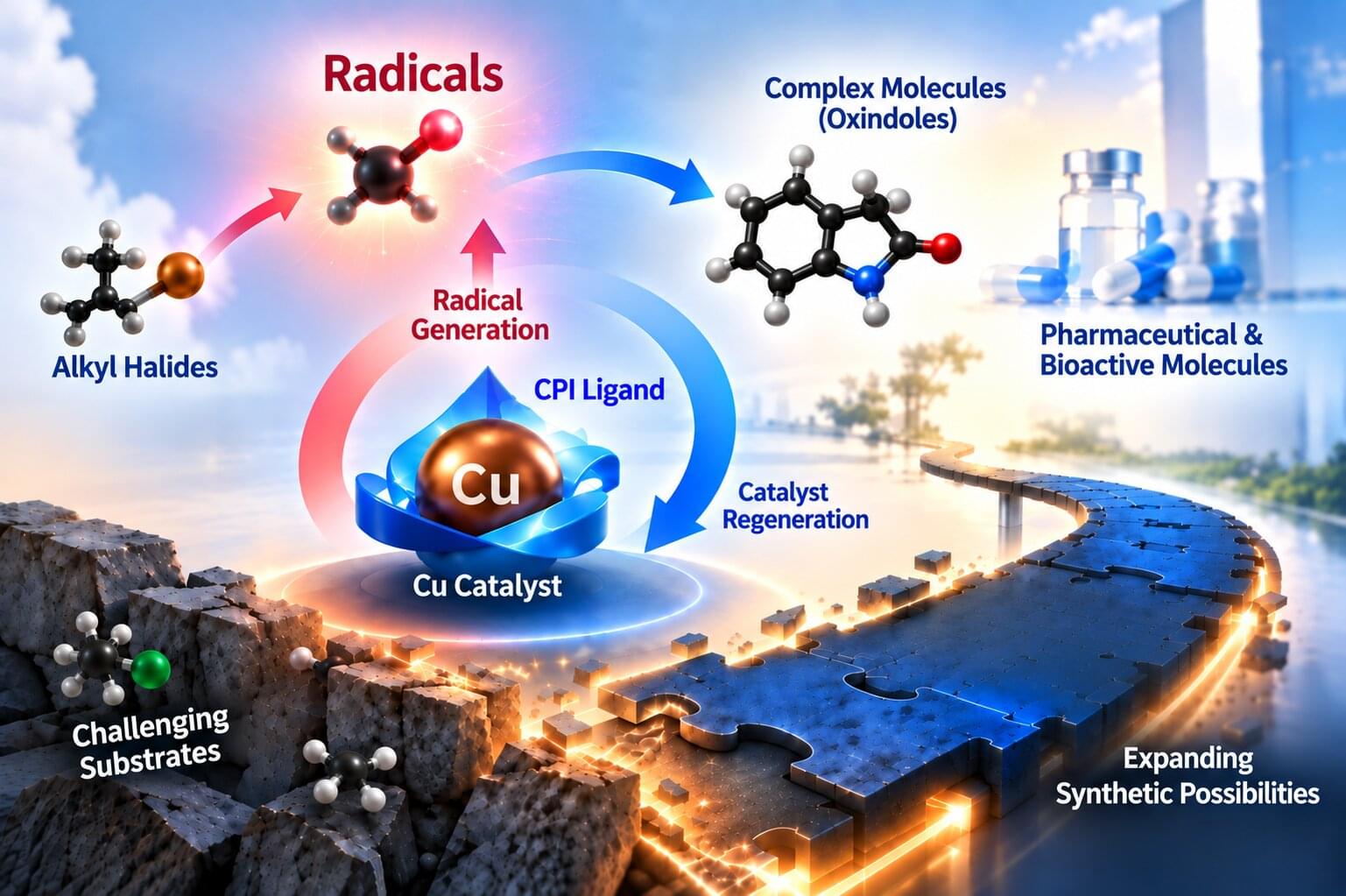
Radicals, atoms or molecules that readily react with other substances to form new bonds, are useful tools for building complex substances such as pharmaceuticals. But even when a radical is generated efficiently, the reaction cannot continue unless the catalyst returns to its original state.
A KAIST research team has developed a new strategy that balances radical generation and catalyst regeneration, broadening the possibility of using substrates that are difficult to activate to synthesize complex molecules needed for pharmaceuticals and other applications.
The research team led by Professor Sarah Yunmi Lee of the Department of Chemistry developed a method that uses a ligand, a molecule that attaches to a metal catalyst and controls its properties, to effectively regulate the process by which a copper catalyst generates a radical and then returns to its original state.