The human body and its gut microbiome produce thousands of small molecules that shape how the body functions—influencing immunity, metabolism and more. Identifying what those molecules actually are has been one of the biomedical sciences’ most persistent bottlenecks. More than 80% of compounds detected in a typical biological sample cannot be matched to any known structure using current methods.
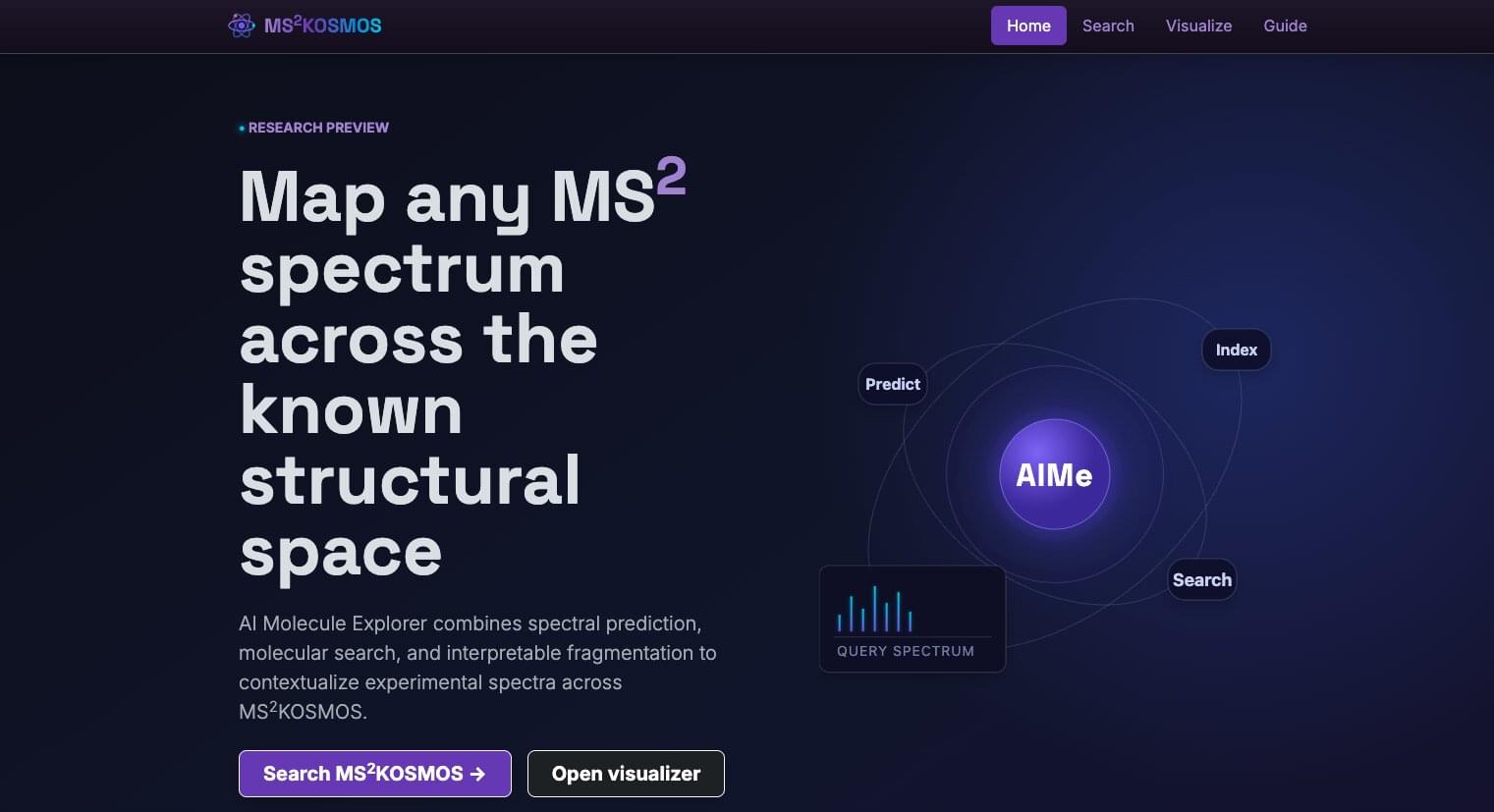
Researchers at the Boyce Thompson Institute (BTI) and Cornell University have developed a tool that begins to change that. AIMe, short for AI Molecule Explorer, uses a form of artificial intelligence called neuro-symbolic AI to predict, organize and search the mass spectra of more than 100 million known small organic molecules—effectively building a vast searchable map of chemical space that can accelerate hypothesis generation and compound identification.
The work is a collaboration between Frank Schroeder, professor at BTI and in Cornell’s Department of Chemistry and Chemical Biology, and Carla Gomes, professor of computing and information science and director of Cornell’s AI for Science Institute.