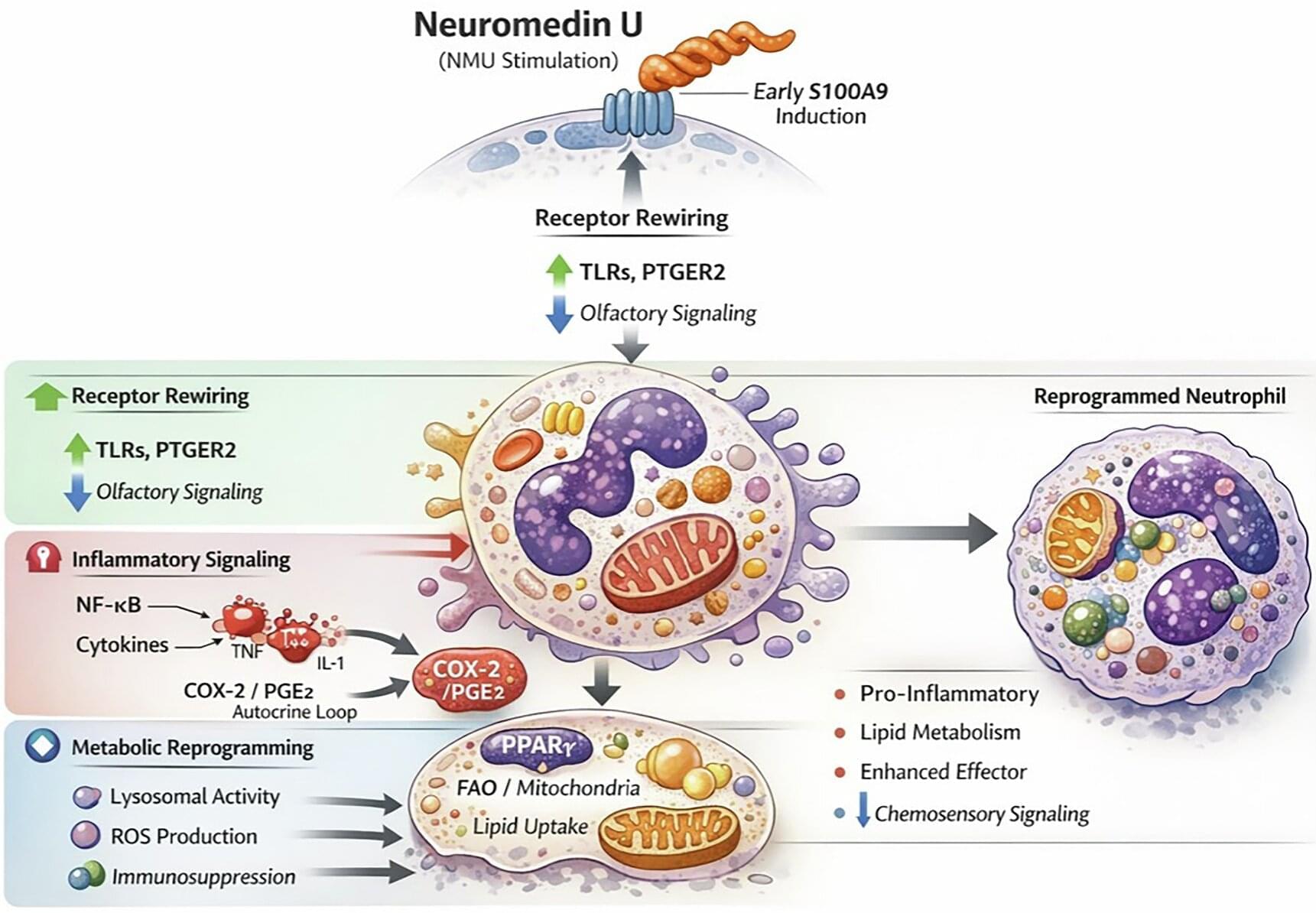
A new study from The Wistar Institute has found a link between the nervous system and the rapid development of neuroendocrine prostate cancer (NEPC), an aggressive form of the disease. Published in Oncogene, the study found high levels of neuromedin U (NMU), a neurotransmitter, in prostate cells during the earliest phase of NEPC formation.
NMU supports tumor progression by blocking the immune response. The findings could point to a treatment target for a disease that is now virtually untreatable.
“We already know that the immune system and cancers communicate with each other, which has led to transformative therapies for cancers that had once been thought of as untreatable,” said Dario C. Altieri, M.D., president and CEO, director of the Ellen and Ronald Caplan Cancer Center and Robert and Penny Fox Distinguished Professor at The Wistar Institute, and senior author of the study.