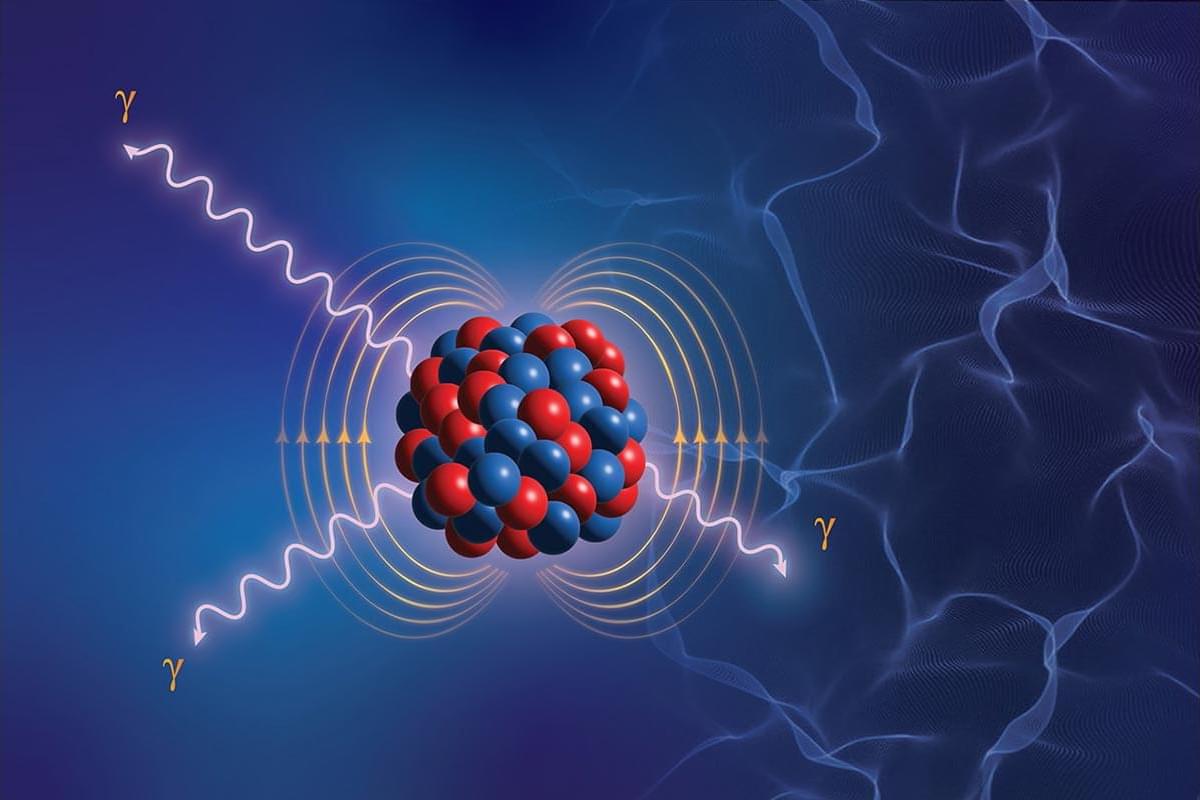
Scientists have traced a decades-old gamma-ray mystery to hidden magnetic transitions inside atomic nuclei.
For decades, nuclear physicists have faced a puzzling question: why do some atomic nuclei release far more low-energy gamma rays than expected?
A new study led by the Facility for Rare Isotope Beams (FRIB), with contributions from scientists at Lawrence Livermore National Laboratory (LLNL), may finally provide the answer. Published in Nature, the research offers new insight into the inner workings of atomic nuclei and could have important implications for astrophysics, nuclear energy, national security, and nuclear forensics.