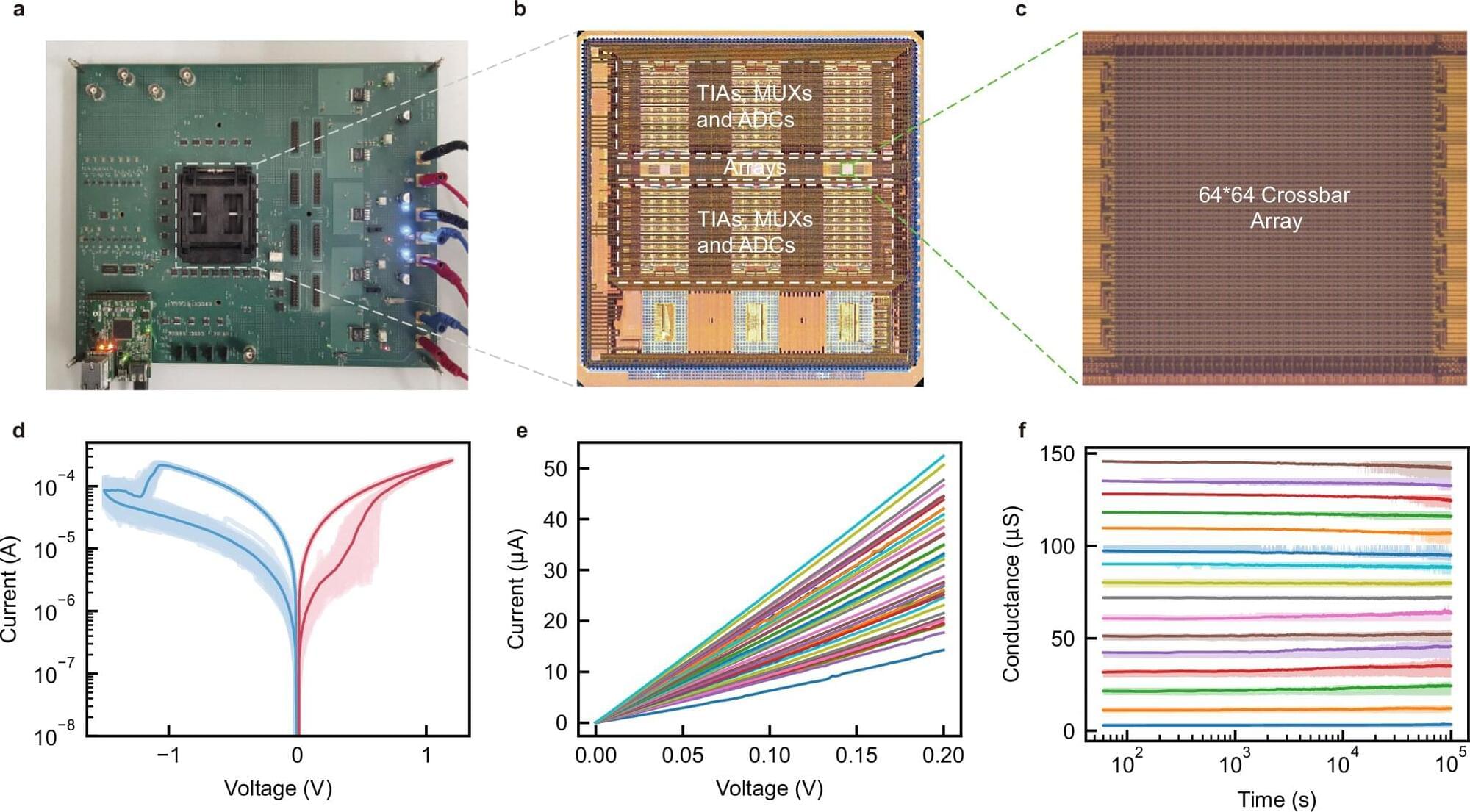
Researchers in the Department of Electrical and Computer Engineering of the Faculty of Engineering and the Centre for Advanced Semiconductors and Integrated Circuits (CASIC) at the University of Hong Kong (HKU) have made a breakthrough in brain-inspired computing. In collaboration with Hewlett Packard Labs, the team has developed a memristor chip that overcomes a long-standing limit on the capacity of “associative memory,” the brain-like ability to recall complete information from a partial cue, while keeping it reliable even when a large fraction of the hardware fails.
Associative memory is something the brain does effortlessly: A few notes bring a whole song to mind, and a glimpse of a face identifies a person. Unlike the RAM in a computer, which must be told exactly where information is stored, associative memory retrieves it by content—the very capability that pattern completion, error correction and recognition depend on.