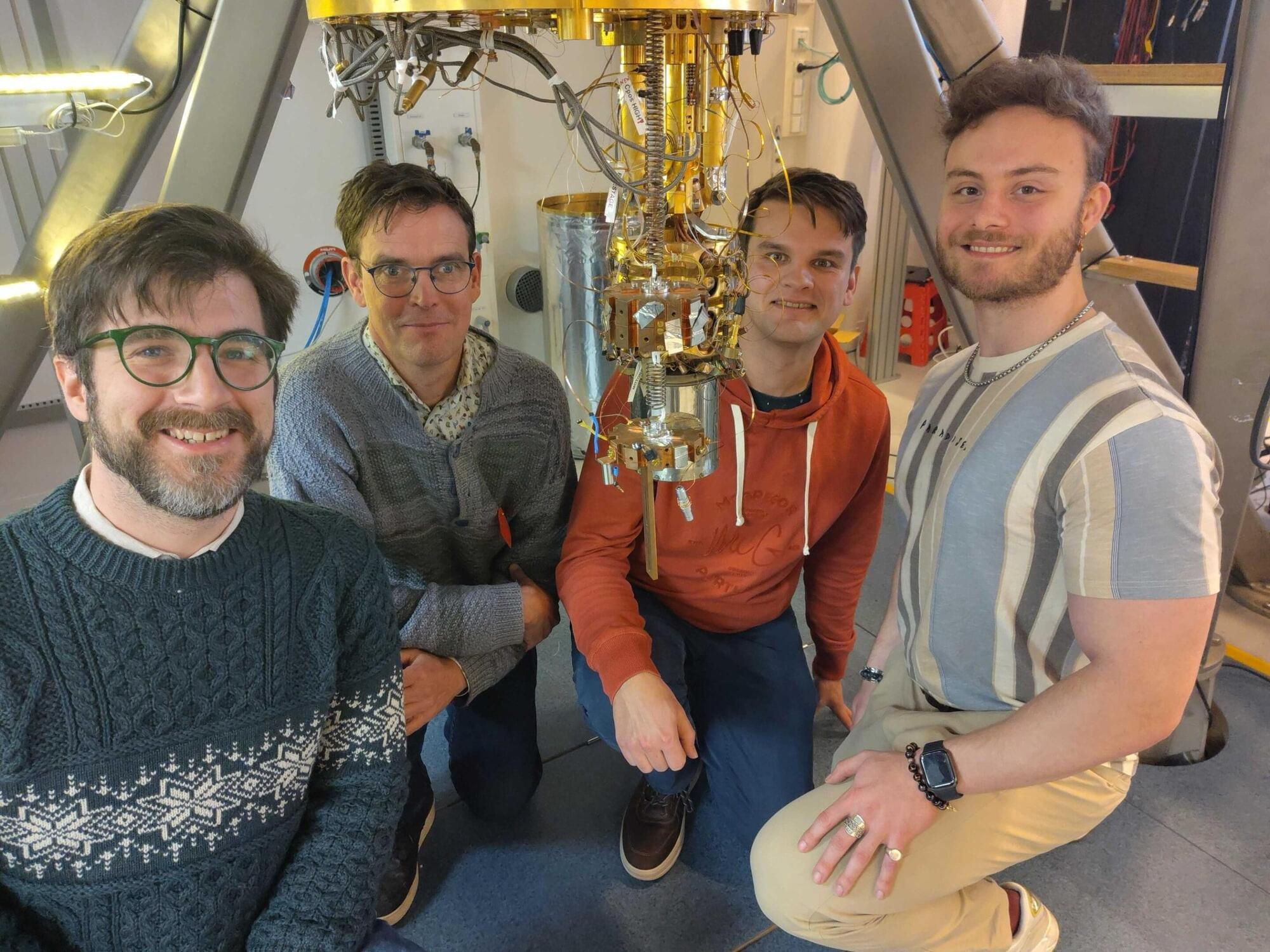
Rice University researchers have used a magnetically levitated particle to search for ultraheavy dark matter, extending the hunt for some of the heaviest possible forms of the invisible matter thought to hold galaxies together. Led by Christopher Tunnell, associate professor of physics and astronomy, the researchers used a tiny floating magnet as a highly sensitive detector designed to register the faint push an ultraheavy dark matter particle could produce as it passed through.
Dark matter plays a fundamental role in the structure of the universe, influencing the formation and stability of galaxies such as the Milky Way. However, scientists have yet to determine its composition. Understanding what dark matter is made of could enhance knowledge of how galaxies formed and evolved.
Most dark matter experiments focus on particles with masses similar to those of atoms, but some theories propose that the particles might be significantly heavier, potentially reaching the mass of a living cell. This Rice-led research demonstrates how a floating magnet can broaden the search to include these heavier candidates. The findings were released at the 2026 International Conference on Particle Physics and Cosmology.