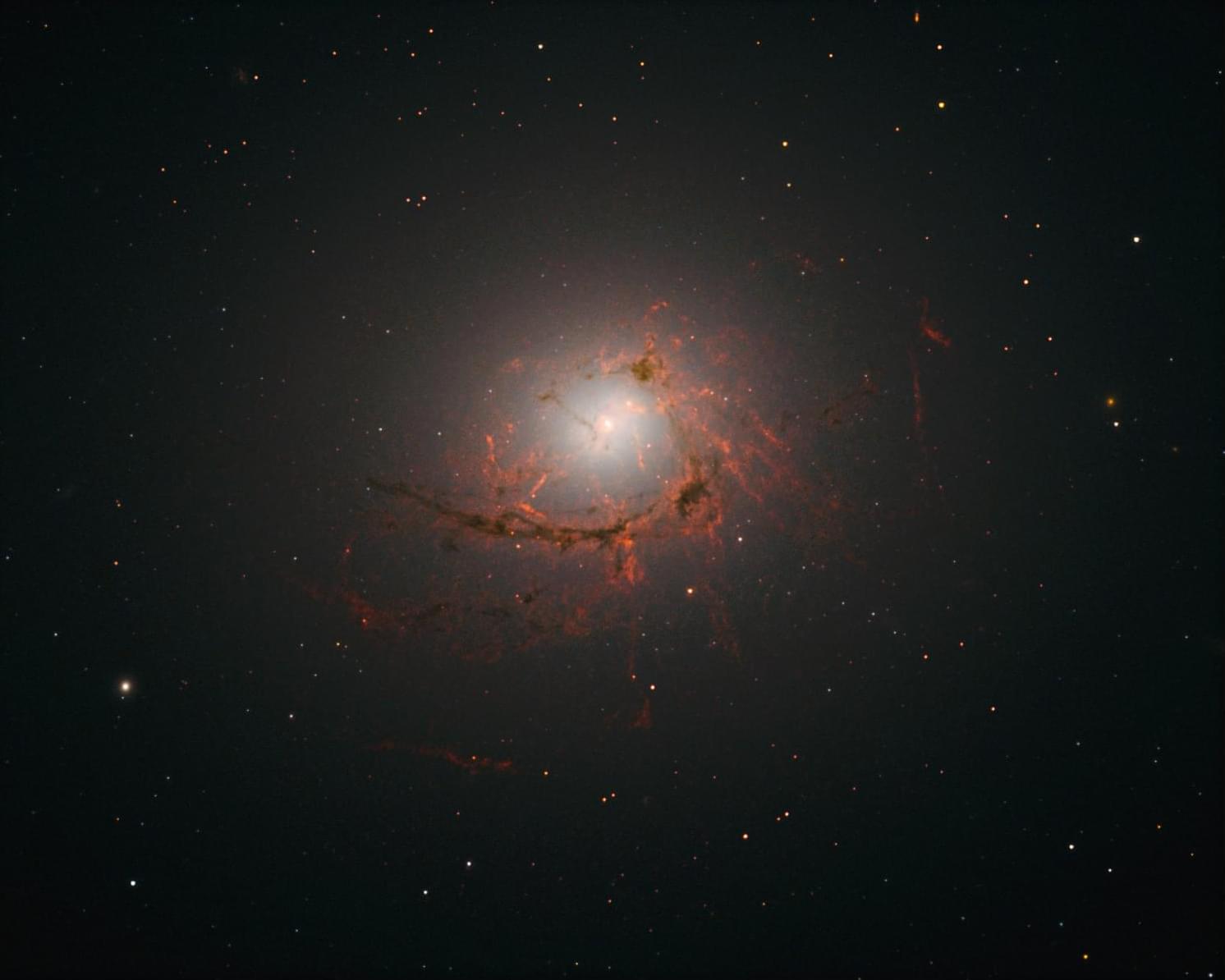
An international team using the JWST has found photographic evidence that brings astronomers closer to solving a long-standing mystery about black holes.
For decades, astronomers have faced a puzzle at the centers of massive galaxies: how can a supermassive black hole keep feeding when its own powerful jets heat the surrounding gas that supplies it? New observations from the James Webb Space Telescope, or JWST, are bringing that process into much sharper view.
The images provide the clearest look yet at gaseous filaments linking a galaxy’s hot atmosphere to the rotating disk that supplies material to its central supermassive black hole.