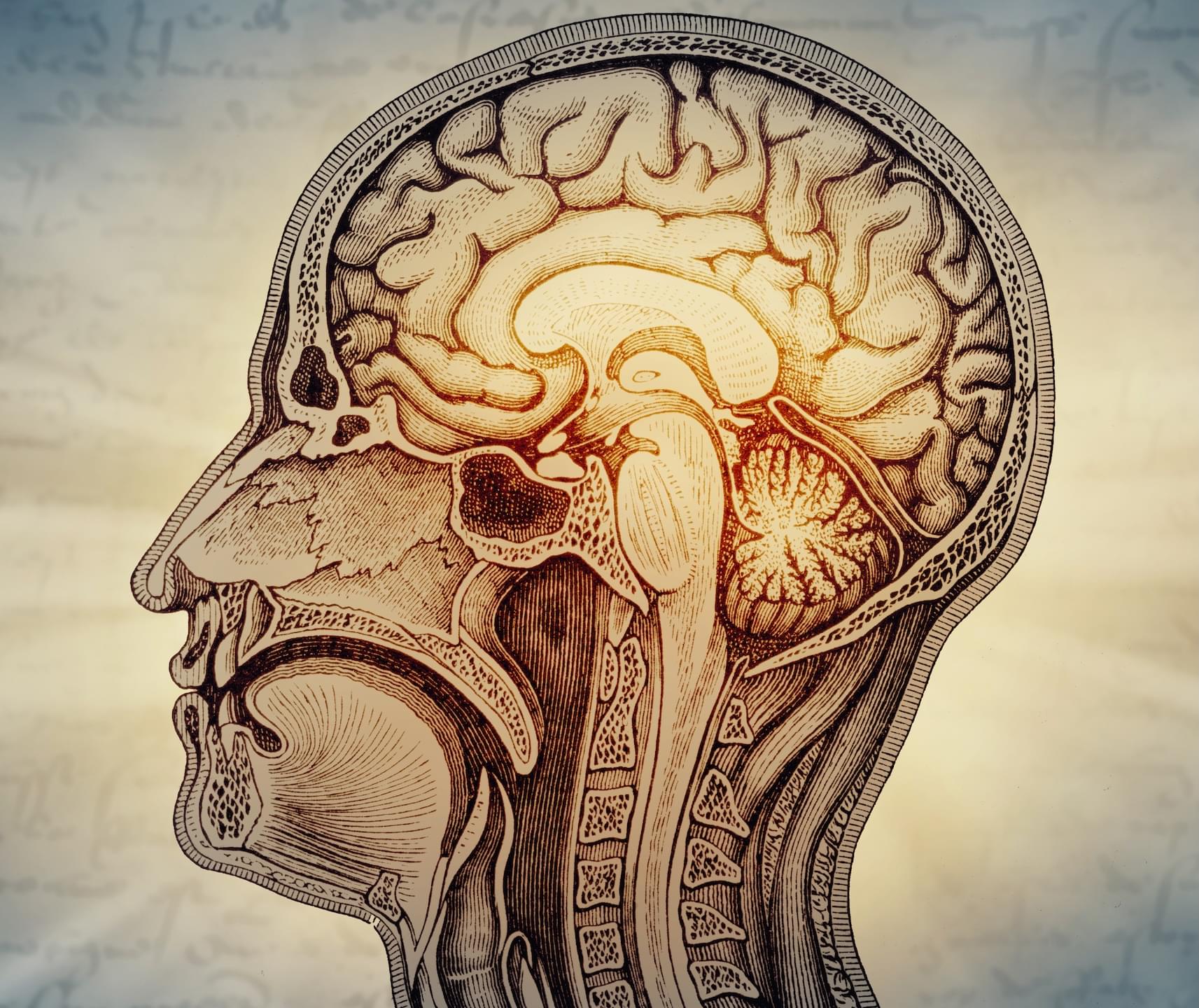
“A new study led by Stanford Medicine found the brain is two separate organs adjacent to one another. The finding could aid research into devastating neurological diseases.”
Published in Nature Neuroscience, the study challenges the conventional model in which the entire brain is derived from a single common neural ectoderm progenitor population.
Using lineage-tracing experiments in mouse embryos, researchers found evidence for two parallel neural ectoderm progenitor populations that emerge during gastrulation:
• Anterior neural ectoderm, associated with development of the forebrain and midbrain • Posterior neural ectoderm, associated with development of the hindbrain.
The researchers then modeled these developmental populations using human pluripotent stem cells. The anterior-and posterior-like neural ectoderm populations showed different developmental potentials and distinct chromatin accessibility patterns, suggesting that their future regional identities are established surprisingly early.
Importantly, by reproducing the posterior developmental pathway, the researchers were able to generate electrophysiologically active human hindbrain rhombomere 5/6 motor neurons — a neuronal population that has been difficult to produce in vitro.
That could have practical importance for neuroscience. These cells may provide improved laboratory models for disorders involving hindbrain motor neurons, including spinal muscular atrophy (SMA) and amyotrophic lateral sclerosis (ALS), and potentially improve our ability to investigate human brainstem biology.
The evolutionary part of the study is especially intriguing, although it should be interpreted more cautiously.
The researchers identified comparable anterior/posterior ectodermal patterning involving Otx and Gbx genes in several widely separated species, including mammals, chickens, zebrafish and the acorn worm. Because hemichordates and chordates share an ancestor that lived roughly 550–600 million years ago, the authors propose that this developmental division may be extremely ancient.
They describe the brain as potentially a “composite organ” arising from two lineage-restricted progenitors.
That does not mean researchers have literally proven that humans possess “two brains,” nor does the study establish that two fully independent ancestral brains simply fused together. The strongest evidence concerns two distinct developmental programs; the deeper evolutionary interpretation remains a hypothesis arising from the comparative evidence.
Still, the finding raises interesting questions.
Could some neurological diseases ultimately be better understood according to the developmental lineage of vulnerable neurons rather than only their location in the adult brain?
Could more accurate hindbrain organoids or cell models be produced by recreating this early developmental pathway?
Could regenerative strategies eventually need to reproduce the correct progenitor identity before attempting to generate replacement neurons?
And, much more speculatively, there is an interesting analogy for artificial intelligence.
Biological intelligence does not necessarily appear to have emerged from a completely homogeneous developmental architecture. Complex nervous systems can integrate neural populations with distinct developmental programs into a highly coordinated whole.
Future AI systems might likewise benefit from integrating specialized computational architectures rather than assuming that every capability must emerge from one uniform network.
That AI comparison is only an analogy — the study itself makes no claims about artificial intelligence or consciousness — but understanding how biological nervous systems became organized may offer useful inspiration for how complex artificial systems could eventually be constructed.
Study: Jokhai RT, Dundes CE, Ahsan HS, et al. Two parallel neural ectoderm progenitors contribute to the developing brain. Nature Neuroscience (2026). DOI: 10.1038/s41593-026–02433-7
Stanford Health Care delivers the highest levels of care and compassion. SHC treats cancer, heart disease, brain disorders, primary care issues, and many more.