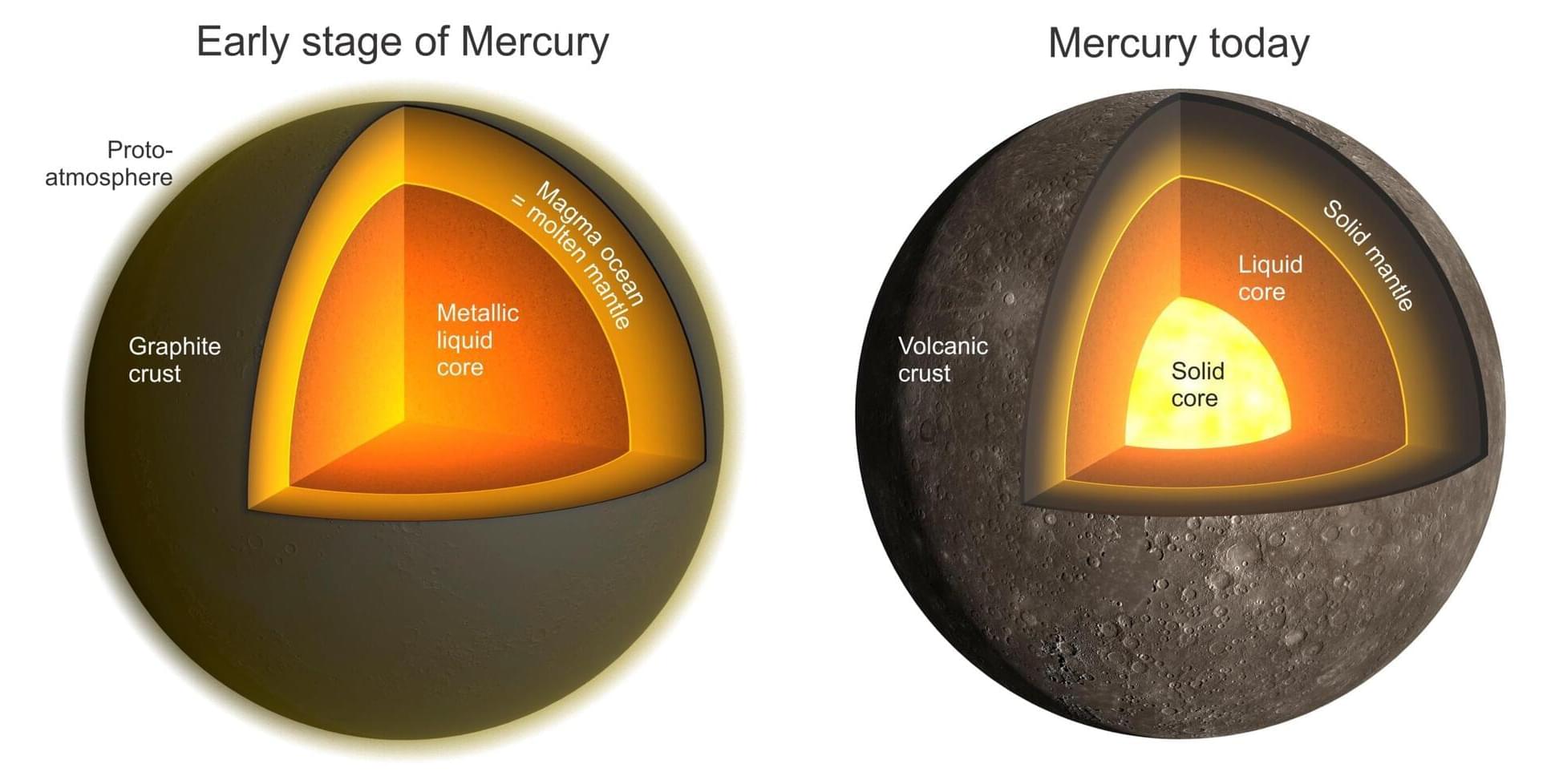
As the BepiColombo mission prepares to enter the final phase of its journey to Mercury, a series of studies conducted by researchers at the University of Liège and KU Leuven sheds new light on the early stages of the evolution of the planet closest to the sun. Using experimental petrology, the researchers are reconstructing in the laboratory the formation of Mercury’s core, the crystallization of its magma ocean and the formation of its mantle. The studies are published in Earth and Planetary Science Letters, Nature Communications and Advances in Geochemistry and Cosmochemistry.
The terrestrial planets (Mercury, Venus, Earth and Mars) are the result of more than four billion years of evolution, which began with accretion from the disk surrounding the young sun. During the early stages of evolution, the heat released caused these planets to melt, creating what is known as a magma ocean.
This key stage determines the distribution of elements between the metallic core and the mantle. As it crystallizes, this ocean structures the solid mantle, the partial melting of which will subsequently generate the magmas that form the crust. It is also at this stage that an initial atmosphere may form.