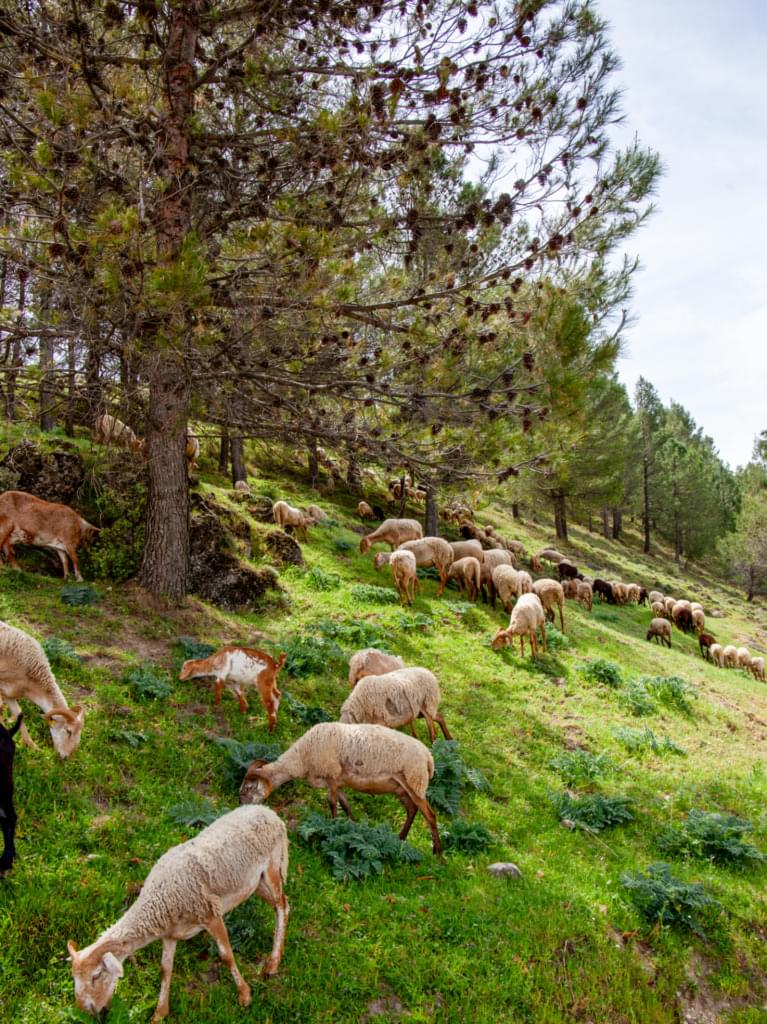
Marcelli, his 1,500 sheep, 50 herding dogs, and the few dozen people he employs at his agricultural firm in the hilltop town of Anversa degli Abruzzi are some of the last vestiges of a nomadic pastoral tradition pre-dating the founding of Rome. It’s a practice that could also be Europe’s best unheralded tool to curb the extreme wildfires that have ravaged the continent year after year.
Climate change has supercharged heatwaves in the Mediterranean and caused prolonged droughts, leaving vegetation severely dehydrated. Rural land abandonment in recent decades and dwindling pastoral activities have also allowed trees, shrubs, and tall grasses to encroach across grasslands, turning swathes of southern Europe’s countryside into highly flammable tinderboxes.
Scientists and herders say encouraging more extensive grazing can help manage landscapes and stem the tide of wildfires. But the current incentive structure rewards large-scale, intensive operations that can guarantee high yields, rather than the extensive grazing practices that tend to be most beneficial to the land. For pastoralism to survive in modern Europe, shepherds say, it will require subsidies and targeted assistance from national governments and the European Union—support that has so far failed to gain traction among policymakers.