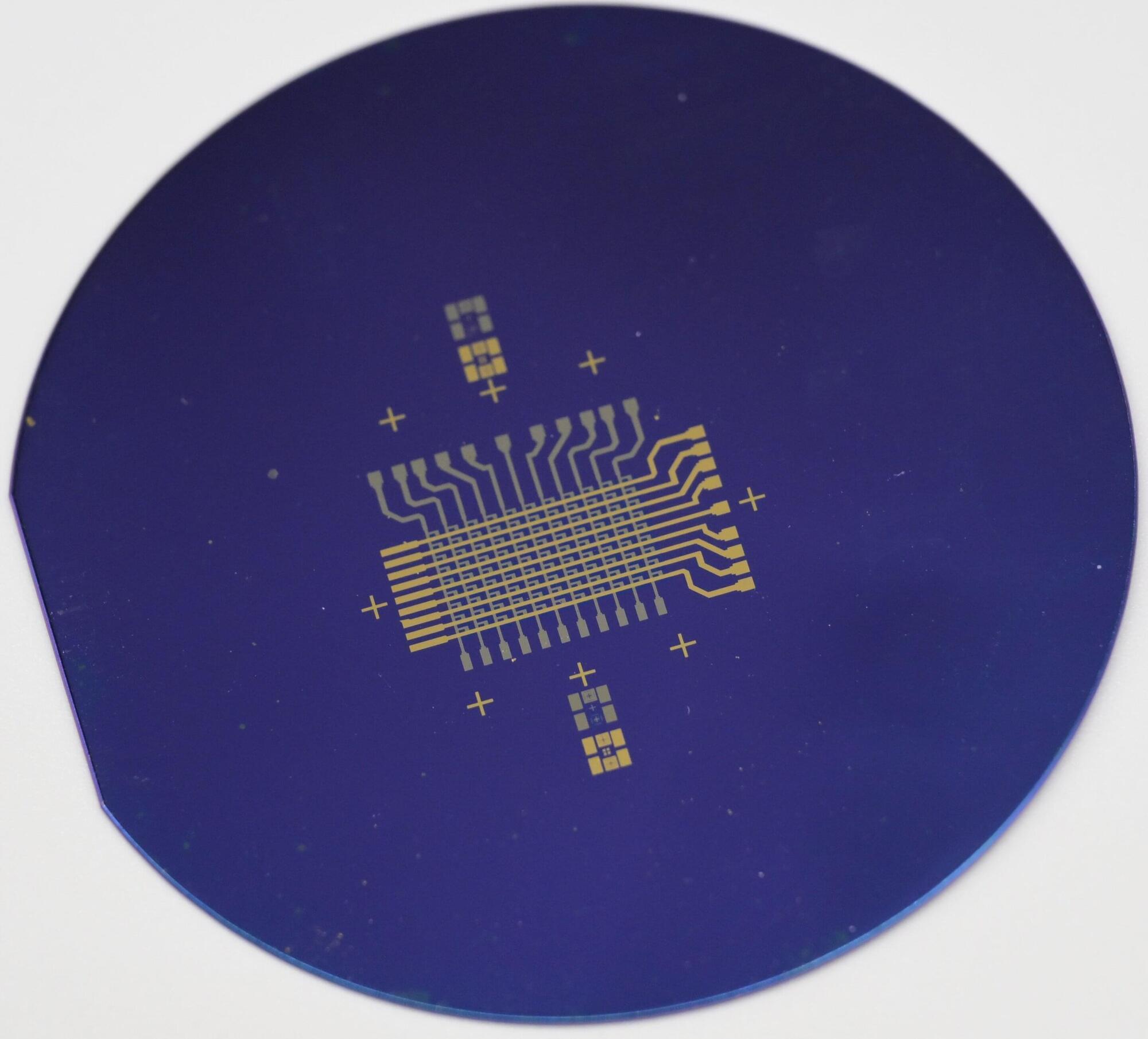
Electronics engineers worldwide have been trying to develop increasingly smaller components that can store and process information while consuming less energy. Ferroelectric materials, which possess spontaneous electrical polarization that can be reversed by an externally applied electric field, have proved promising for the development of denser, more energy-efficient memories and other miniaturized electronic components.
Despite their potential, shrinking these materials to produce ultrathin films that are just a few atoms thick often alters some of their properties and characteristics. Specifically, their internal polarization can become unstable at these scales, and switching it often requires relatively high voltages.
Researchers at Westlake University and Zhejiang University recently showed that gallium oxide (Ga₂O₃) could become ferroelectric at near-atomic thickness, retain stable polarization and switch between its polarization states at a relatively low voltage of 0.8 volts. Their paper, published in Nature Electronics, highlights the potential of this material for the development of compact, nonvolatile memories, small sensors and other low-power electronic components.