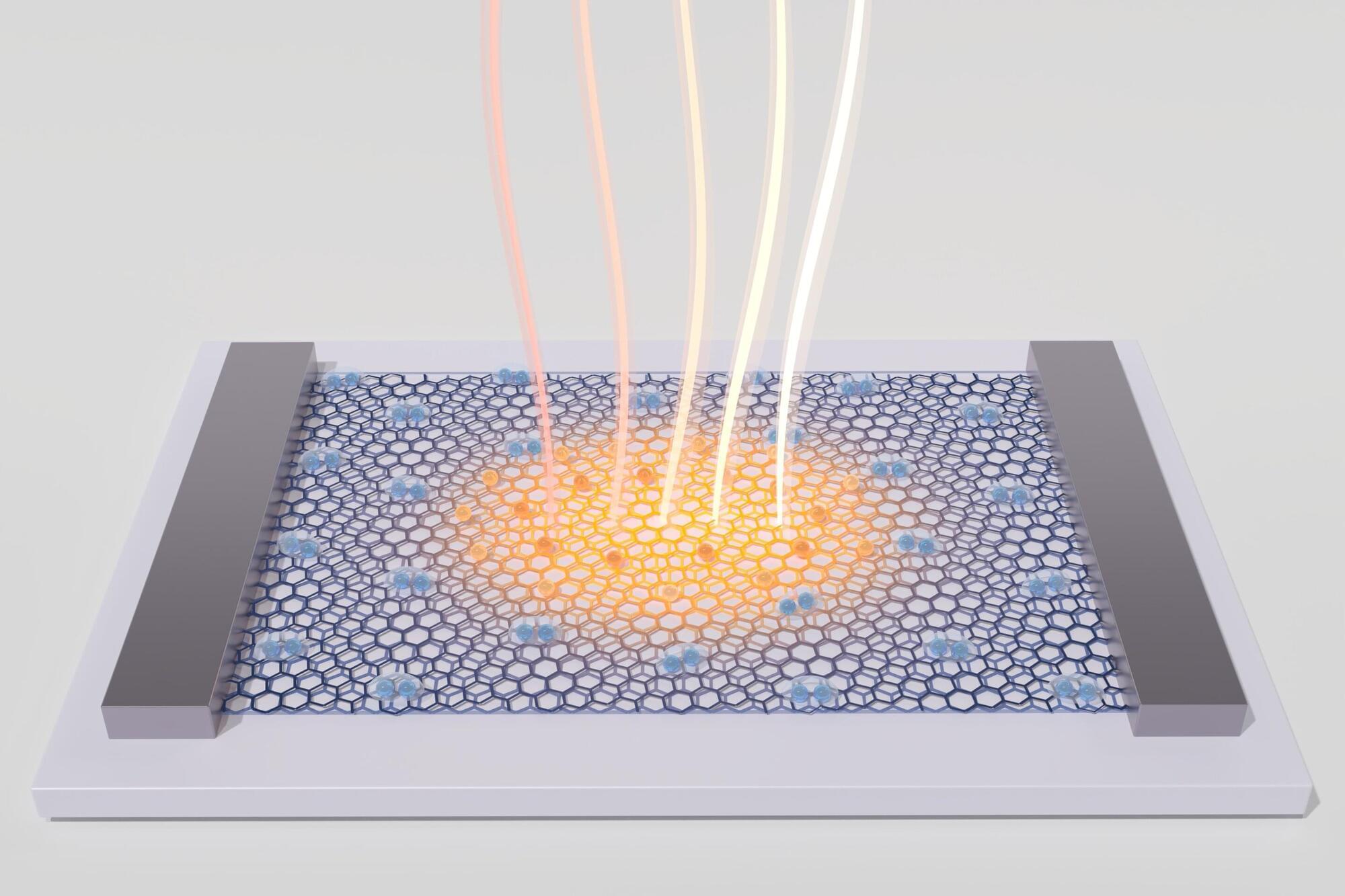
One of the central ideas in modern physics is the phase transition—a sudden transformation of the state of a material. We encounter phase transitions throughout everyday life: water freezes into ice, wax melts in the warmth of a flame, and water vapor condenses into droplets on a cold window. In these familiar examples, the atoms themselves rearrange into a new structure, giving the material entirely different properties.
But some of the most fascinating phase transitions are invisible to the naked eye. Instead of atomic rearrangement, it is the electrons that collectively reorganize into a new quantum state. A subtle change in external parameters—temperature, magnetic field or even exposure to light—can completely transform how such a material behaves.
Superconductivity is perhaps the most celebrated example of an electronic phase transition. For over a century, the superconducting state—carrying electrical current without any resistance—has captivated physicists. Yet the transition itself is just as remarkable as the state it leads to. Near the transition point, even a tiny external stimulus produces a dramatic change in the material’s properties. This extraordinary sensitivity has made superconductors the foundation of some of the world’s most sensitive detectors, capable of registering individual photons arriving from distant galaxies.