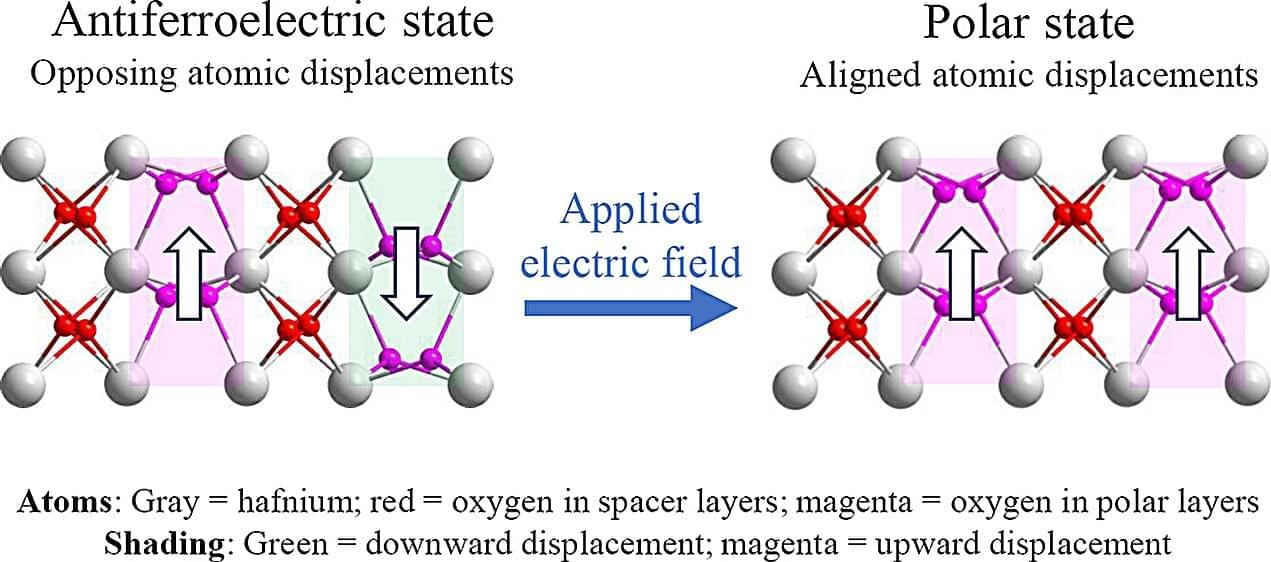
A Husker research team’s latest research could open the door to broader use of a class of materials whose electrical properties may someday power next-generation electronics, high-density energy storage, improved computer memory and new strategies for cooling.
In a new paper published in Science, University of Nebraska–Lincoln researchers Xiaoshan Xu, Alexei Gruverman and Evgeny Tsymbal demonstrate that hafnium oxide—a tough, heat-resistant chemical compound used widely in modern electronics—is inherently antiferroelectric, a rare quality found in very few materials. Unlike hafnium oxide, also known as hafnia, many intrinsically antiferroelectric materials contain the toxin lead, which limits their widespread use.
The trio said the discovery will help settle a longstanding debate about hafnia’s properties. Though scientists have long observed the material’s antiferroelectric behavior, they have disagreed on whether it results from “true” antiferroelectricity or from an artificial effect stemming from the entrapment or redistribution of electrical charges.