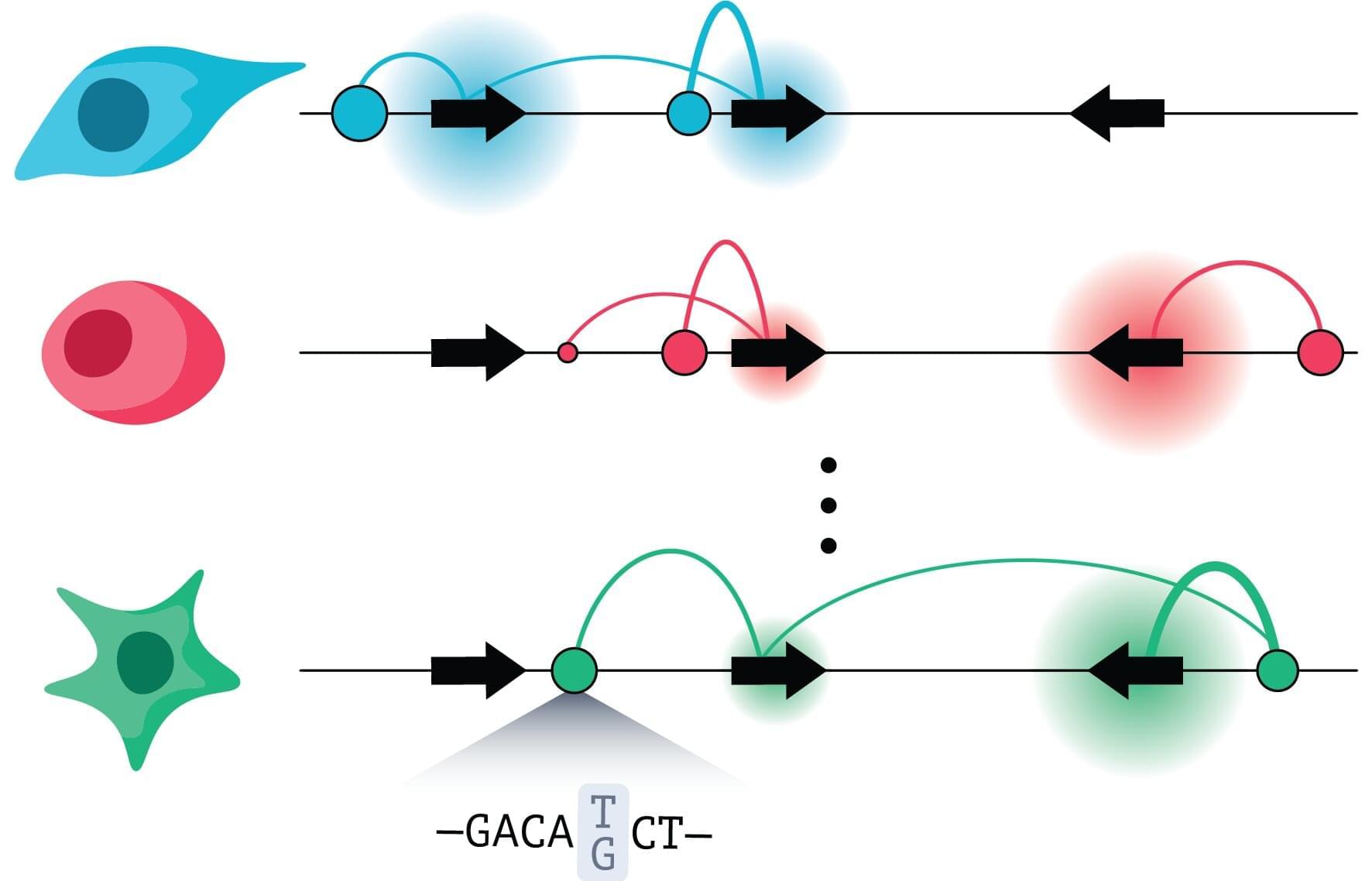
Understanding gene regulation may be key to interpreting human disease genetics. Genes are regulated in part by stretches of DNA called enhancers, which define when, where and how strongly each gene is turned on. Mapping enhancers and how they function in specific cell types is necessary for understanding gene regulation and disease-related genetic variants. But the location and activity of enhancers are highly cell type-specific, making it difficult to accurately predict enhancer–gene interactions.
In recent years, researchers have developed several computational models to predict enhancer–gene regulatory interactions using measurements of chromatin state and three-dimensional contacts.
These models have produced enhancer–gene maps spanning hundreds of cells and tissues. However, these methods remain limited, and confirming their accuracy is difficult because the necessary experiments have been done in only a handful of cell types.