Before diving into the mystery of glass, theoretical physicist Corentin Laudicina takes us back to high school physics for a moment. Although he has spent years studying exactly what happens in a material during the glass transition, he also understands that his research is not the easiest thing to explain off the cuff at the cafeteria table.
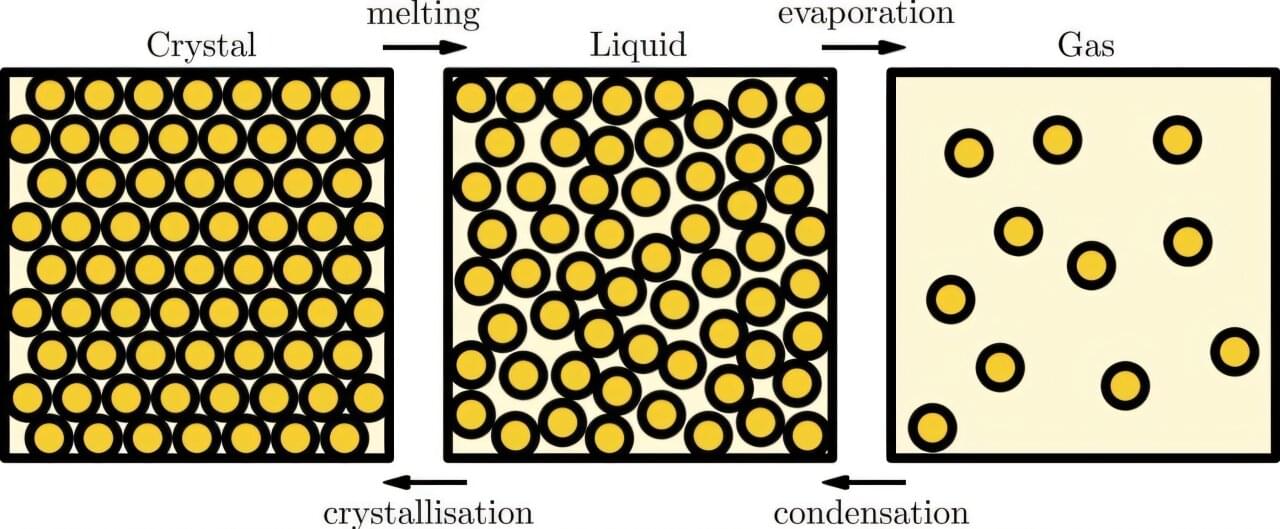
According to school textbooks, matter can exist in three different states: gas, liquid and solid. Think of water vapor, liquid water and ice. The molecules that make up the material are the same, but the way they can move differs greatly, Laudicina explains.
He pulls out his dissertation and shows a figure from the introductory chapter. “The higher the temperature, the more freely the molecules can move. In a solid, they are arranged in a crystal lattice—in a fixed position, at a fixed distance from one another—but in a liquid, they can move without having a fixed position relative to each other. In the gas phase, those movements are even freer.”