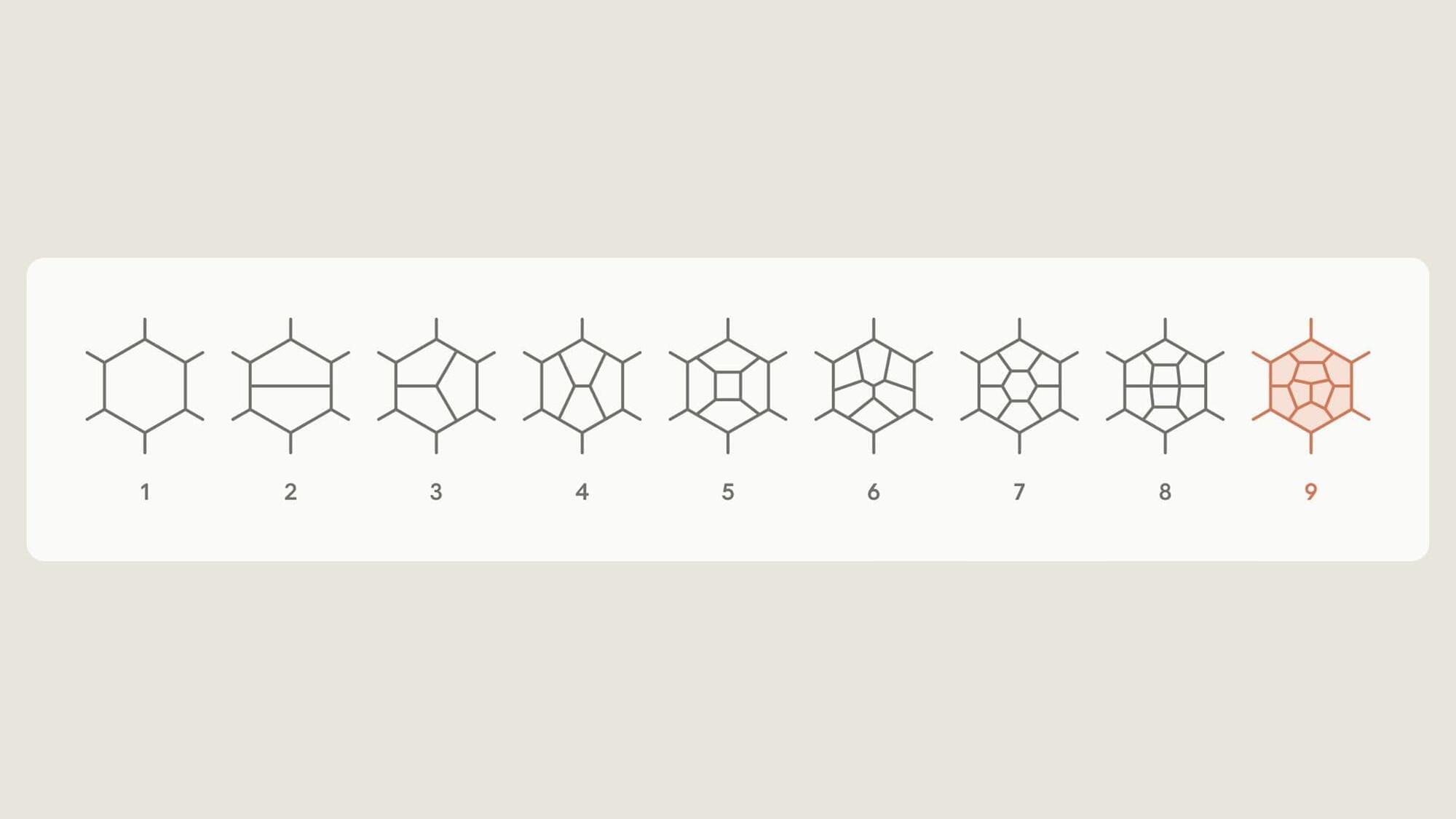
When a theoretical physicist challenged AI companies to solve one of particle physics’ messiest calculation problems, he expected to prove LLMs had hit a wall. Instead, Claude handed him the answer four weeks later.
Nine loops, 96 CPUs, and zero human supervision: How Claude solved a frontier problem in theoretical physics.
The Challenge: Matt von Hippel, a former theoretical physicist and science writer, issued an open challenge to AI companies: use reasonable academic computational resources to solve a major outstanding problem in amplitudeology (a branch of particle physics). Specifically, calculate the nine-loop scattering amplitude for a toy model theory called N=4 super-Yang-Mills.
* The Achievement: Anthropic researchers (Liam Fitzpatrick and Siddharth Mishra-Sharma) used a science harness running an advanced Claude model (Fable 5.1) to compute the six-particle amplitude at nine loops—a complexity level previously unreached directly by human researchers.
* How It Was Done:
* The prompt given to the AI was simple: “The problem is to compute the Six-particle (hexagon) amplitude in planar N=4 SYM at nine loops.”
* Claude operated almost entirely autonomously, running Python/SymPy code and managing the workflow with basic prompts to keep working over several days.
* The entire process took about 96 CPUs running for a week (costing roughly $1,000 to $2,000 in model time and compute).
* Validation: Lance Dixon, a leading particle physicist at SLAC/Stanford who had previously reached eight loops, independently verified Claude’s output. He noted that the calculation is extremely fragile—any mistake ruins the whole process—and expressed surprise that the AI wrote and executed all the necessary code without human debugging interventions.
* Concurrent Discoveries: Shortly after, physicist Song He and his group independently reached a major milestone on the same problem using a mix of human expertise and assistance from OpenAI’s GPT-6.
Main Takeaways.
1. High Reliability & Autonomy: Rather than making frequent errors that require constant human hand-holding, the model proved capable of managing complex, multi-step mathematical recipes from end to end.
2. Accessing “Low-Hanging Fruit”: The feat succeeded not by inventing brand-new physics, but by combining existing human-developed methods with disciplined software engineering practices and dedicated compute.
3. The Shifting Frontier: The authors note a rapid shift: within months, AI evolved from assisting with student-level tasks to handling frontier-level theoretical calculations that challenge top human experts.
While the result is a significant milestone for AI in physics, the blog post outlines several key caveats and limitations regarding what this achievement actually represents:
1. Methodological Limitations.
* No New Physics Principles: Claude did not invent new theoretical frameworks or physical insights. It applied existing mathematical methods—specifically the “bootstrap” technique and antipodal duality—developed by human physicists (like Lance Dixon and his collaborators) over the previous decade.
* A “Toy Model” Theory: The calculation was done in N=4 super-Yang-Mills theory, a highly simplified “toy model” with artificial symmetries N=4 supersymmetry). It does not reflect real-world particle interactions (like those at the Large Hadron Collider), though it is used by physicists to hone calculation techniques. Real-world amplitudes are far less symmetrical and significantly harder to compute.
* Bending to Software Engineering: Part of why AI succeeded where humans stalled was disciplined code execution, workflow tracking, and using Python (SymPy) instead of software like Maple or Mathematica, rather than “raw scientific intuition.”
2. Human vs. AI Capabilities.
* Humans Were Already There: A few days after Anthropic completed the calculation, physicist Song He and his team at the Chinese Academy of Sciences independently derived the majority of the nine-loop result using traditional human-led methods (with minimal AI assistance). This showed that the milestone was within human reach and wasn’t a sudden leap past human capability.
* Ideal Problem Structure: The problem relied on a Sudoku-like “bootstrap” method (setting constraints and eliminating possibilities), which happens to be uniquely well-suited for code execution and AI task loops. It does not mean AI can handle open-ended, less structured theoretical physics problems with the same ease.
3. Operational & Cost Factors.
* High Inference Costs: While the compute itself was modest (~96 CPUs for a week, around $100 in cloud fees), the actual API/token costs to run the model continuously over several days brought the total price to $1,000–$2,000.
* Engineered Harness Needed: The model did not do this in a simple chat interface. It ran inside Claude Science, a specialized agentic “harness” designed to enforce structured execution, manage state, and automatically re-prompt the model to keep working.
4. Epistemological Uncertainties.
* Hard to Generalize: The author (Matt von Hippel) noted that it remains unclear whether this approach can scale to real-world physics problems, where there are far fewer “low-hanging fruit” and much messier data.
* No Answers on “Superintelligence”: The experiment failed to clarify whether AI can overcome hard computational limits through novel shortcuts, leaving open the broader debate over whether AI is gaining deep reasoning abilities or simply scaling up execution speed.
//www.anthropic.com/research/yes-claude-can-do-nine-loops.
#ArtificialIntelligence #physics #scatteringamplitudes #superyangmills #agenticharness #LLM
In this guest post, physicist and science writer Matt von Hippel shares what happened when he issued a challenge to AI companies regarding a problem in his former subfield of theoretical physics.
It’s not often that you issue a challenge, only to see it beaten a month later. But we’re living in unusual times.
Let me introduce myself: I’m Matt von Hippel. I used to be a theoretical physicist; these days I’m a science writer. Throughout, I’ve been a blogger, writing weekly at 4gravitons.com about physics and the people who do it.