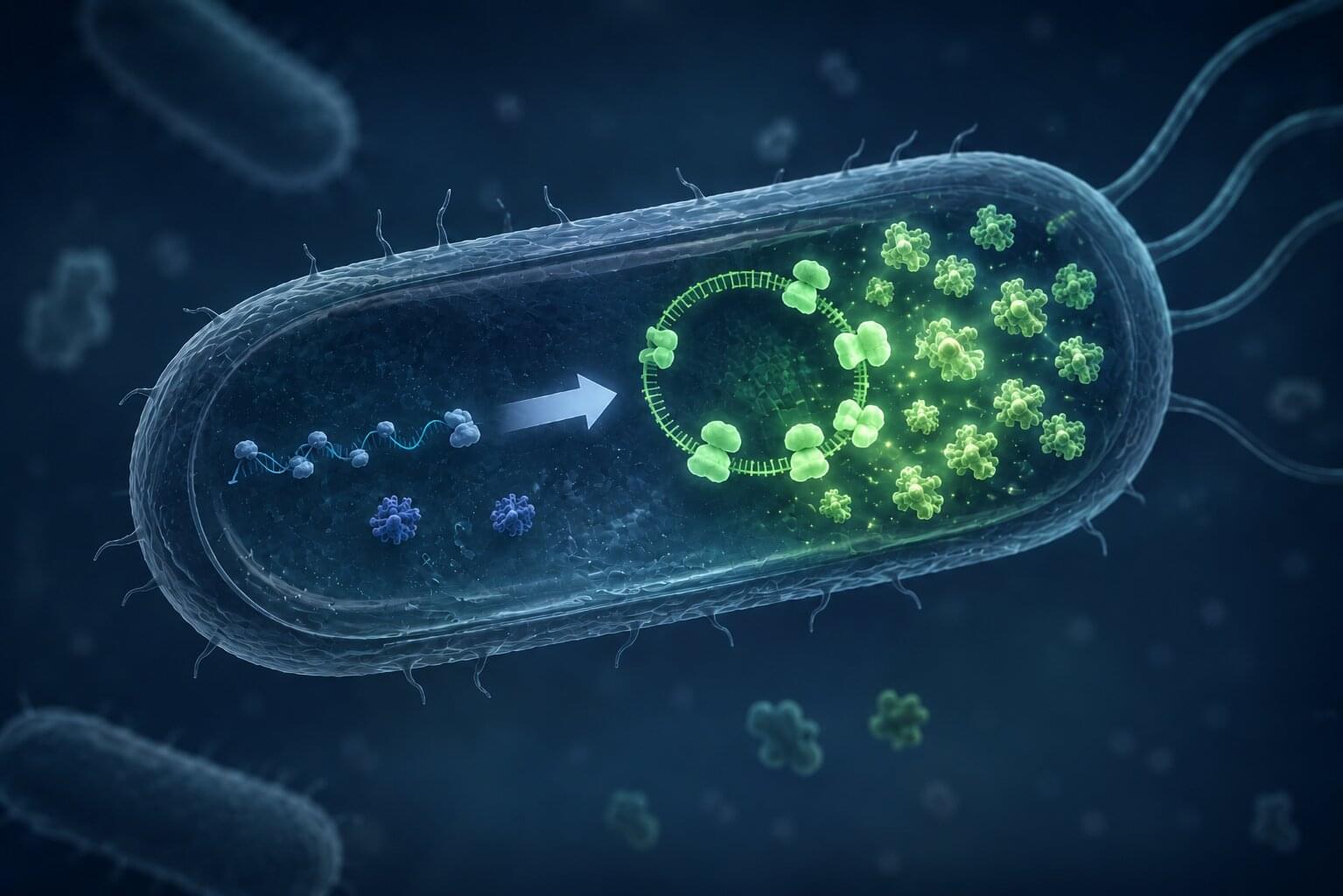
A synthetic biology technology has been developed that converts easily degraded messenger RNA (mRNA) into a ring-shaped form inside microbial cells, increasing protein production.
A research team led by Professor Sang Woo Seo of the Department of Chemical and Biological Engineering at Seoul National University College of Engineering has developed a synthetic biology technology that converts linear mRNA into a circular form inside microbial cells, simultaneously increasing mRNA stability and protein production efficiency. The team named the technology CRESEnT (Circular RNA Expression for Stable and Enhanced Translation).
Compared with a control in which circularization did not occur, CRESEnT increased fluorescent protein production by up to 5.95-fold and intracellular mRNA levels by 3.95-fold. The amount of protein produced per mRNA molecule also increased by 1.51-fold. The researchers confirmed the technology’s effectiveness not only in Escherichia coli but also in Bacillus subtilis and Corynebacterium glutamicum, and applied it to the production of valuable compounds including flaviolin, itaconic acid, lycopene and violacein.