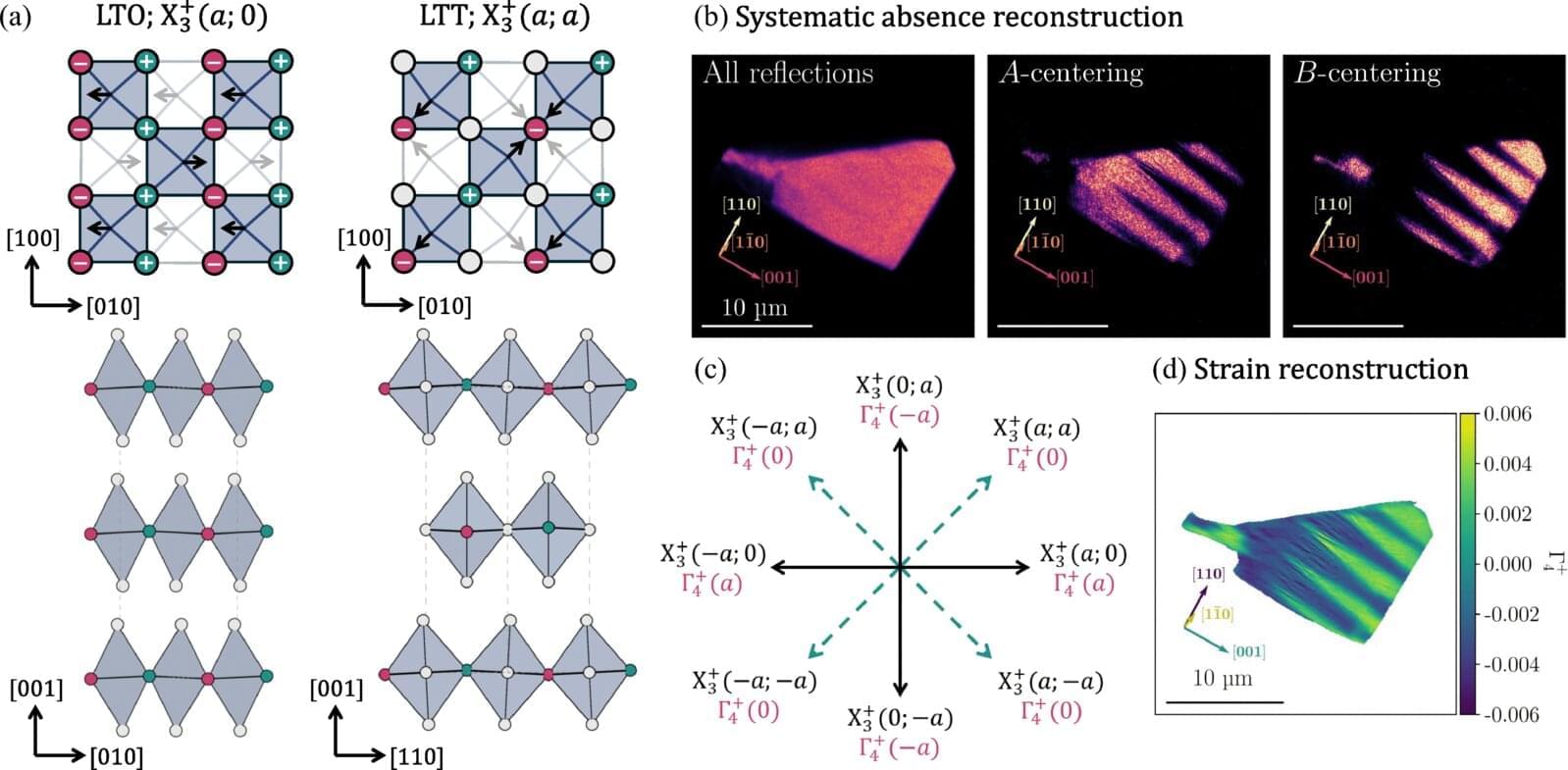
Scientists at Warwick have shown that a material treated for 40 years as a uniform, textbook superconductor is in fact a patchwork of different crystal structures throughout its bulk, using an advanced 3D imaging technique to see deep inside the crystal for the first time.
High-temperature superconductivity is widely regarded as one of the most significant scientific discoveries of the past 40 years. It promises technologies built on electricity that flows with zero resistance and magnets far more powerful than anything possible today, and it underpins research into future power grids, medical scanners and quantum computers.
The study, published in Physical Review Letters and led by researchers in the Department of Chemistry at the University of Warwick working with the European Synchrotron Radiation Facility (ESRF) in France, looked inside a type of superconductor called a cuprate, a copper-based material that can carry electricity with no resistance at unusually high, though still very cold, temperatures.