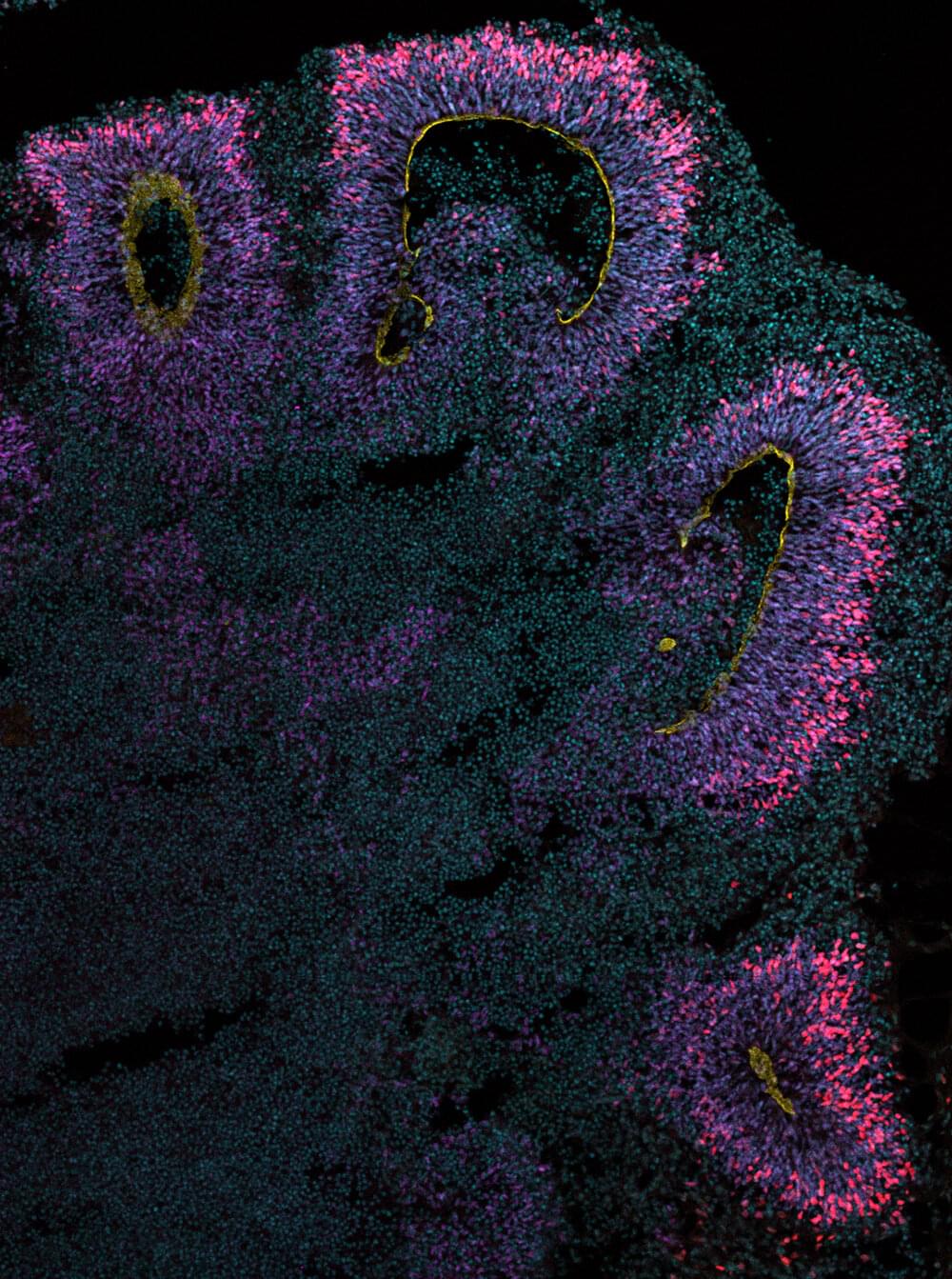
Most primate species have relatively large brains with surfaces marked by pronounced bulges and furrows. This is not the case with common marmosets (Callithrix jacchus). The brains of these small monkeys are smooth and virtually unfolded.
Researchers at the German Primate Center (DPZ)—the Leibniz Institute for Primate Research in Göttingen—investigated which cellular processes during embryonic development cause the marmoset brain to develop differently from a certain stage onward.
In experiments with brain organoids, they were able to show that certain neural progenitor cells—from which neurons arise—develop differently in marmosets, both morphologically and temporally. Several processes occurring at different levels and involving various types of progenitor cells govern this phenomenon, which ultimately leads to a reduction in the size and folding of the marmoset brain.