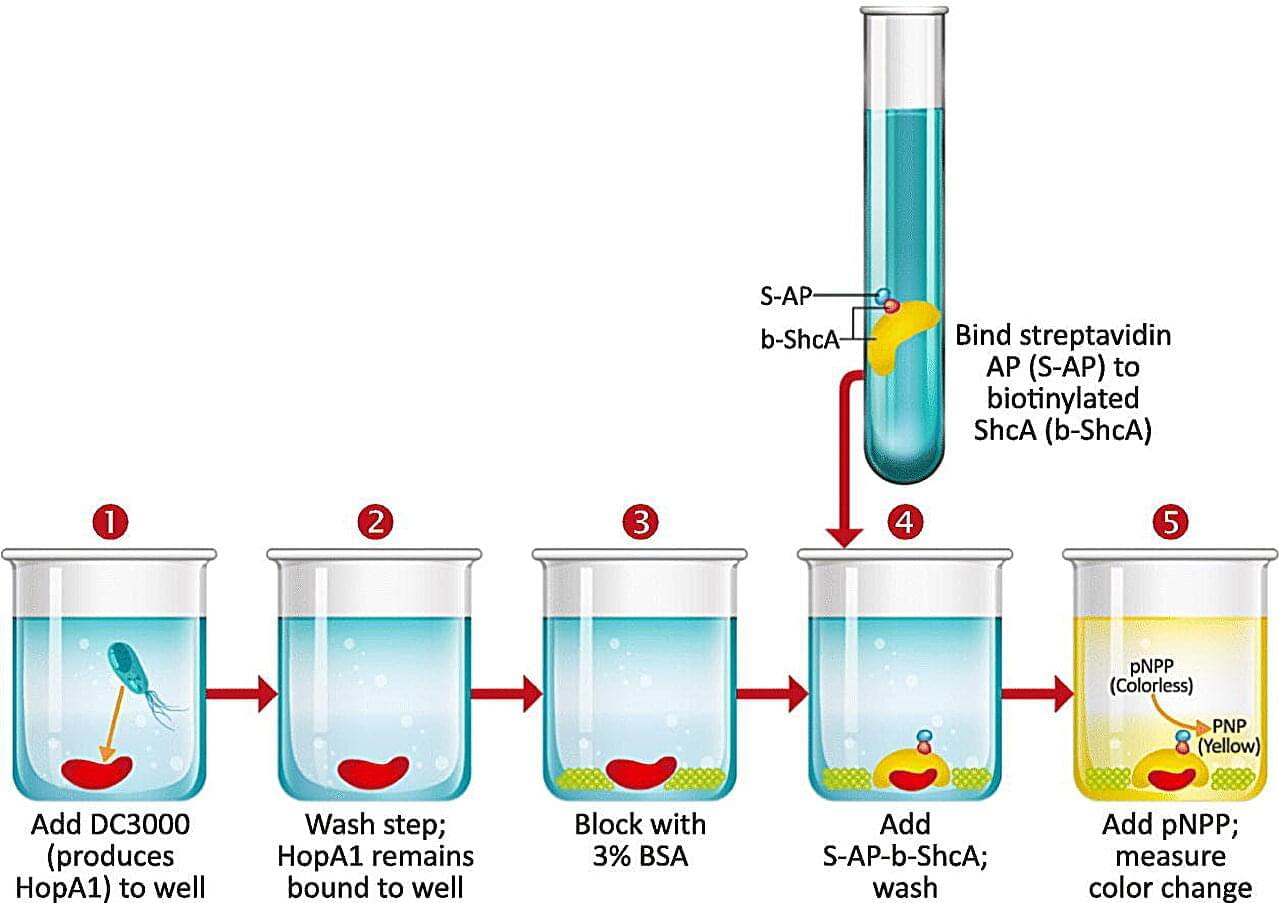
Scientists, clinicians, seed companies and others may soon have a new tool in their toolkit for detecting bacterial pathogens, thanks to a new study by researchers in Penn State’s College of Agricultural Sciences. The research—published in Journal of Microbiological Methods—details a new method for detecting Pseudomonas syringae, a common bacterium that infects a wide variety of crops, vegetables and woody ornamentals.
The cost is similar to that of the traditional method, called enzyme-linked immunosorbent assay, or ELISA. However, the researchers’ new method—called enzyme-linked chaperone assay, or ELCA—has the potential to detect only living bacteria, making it more sensitive and accurate.
Rachel Herschlag, lead author on the paper who earned her doctorate in plant pathology at Penn State, said the study is a proof of concept, with an opportunity in the future to adapt the method for detecting other pathogens.