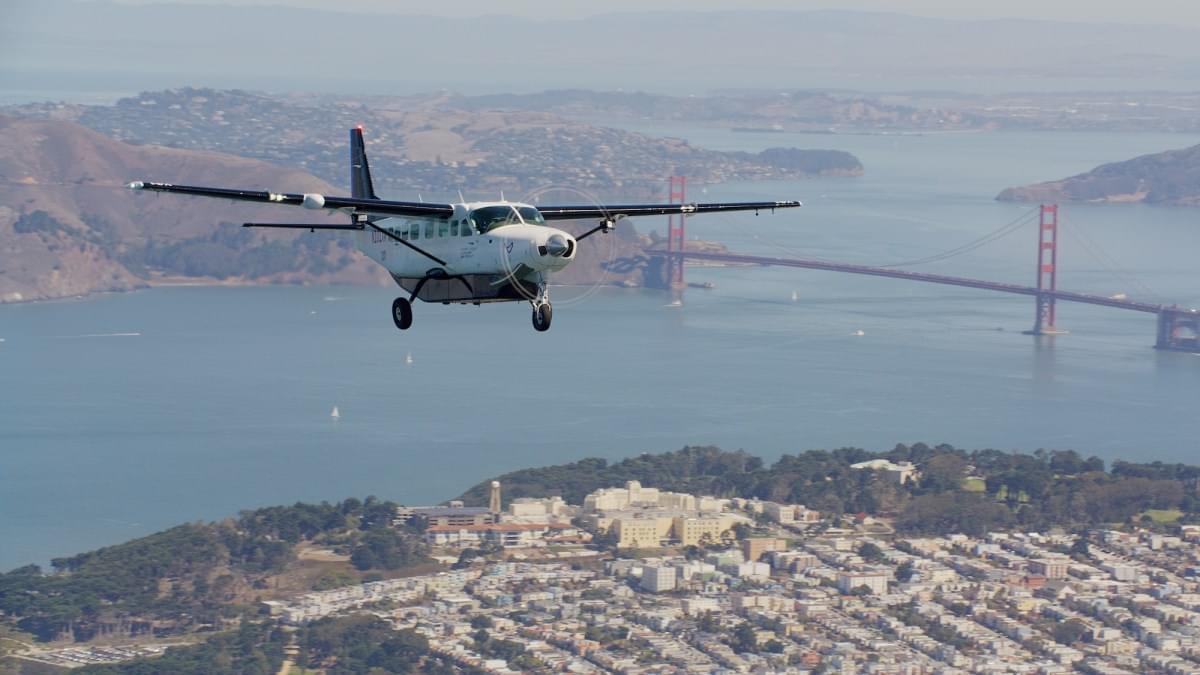
A single-engine prop Cessna Caravan has reportedly become the first airplane to autonomously complete a cross-continental flight across the United States. Overseen by the aeronautics company Joby, the retrofitted aircraft began its challenge in Concord, California, on September 7, ultimately traveling 3,199 miles with no assistance from its onboard human safety pilot. However, the plane didn’t only fly itself once airborne. Autonomous programming directed every stage of its multi-stop journey, including taxiing, takeoffs, and landings.
“Autonomy has an important role to play in the future of flight,” Joby founder and CEO JoeBen Bevirt said in a statement on September 18. Bevird added that the technology could soon help “connect remote communities, deliver critical supplies, respond faster to disasters, support military operations, and keep pilots out of harm’s way.”
The endeavor couldn’t always follow a preset course. Instead, the autonomous plane needed to navigate numerous common air travel challenges in real-time. These included piloting through one of the nation’s busiest regions above Phoenix, Arizona, as well as rerouting around thunderstorms and severe weather fronts. During its trip, the experimental plane also made demonstration stops at Alliance Airport in Fort Worth, Texas, and at South Carolina’s Shaw Air Force Base.