Well-characterized patient-derived models of adult ependymoma (EPN) remain limited. We established a patient-derived organoid (PDO) platform from adult EPN and evaluated its histopathologic and immunophenotypic characteristics, transcriptomic relationship to parental tumors, and in vivo tumorigenicity.
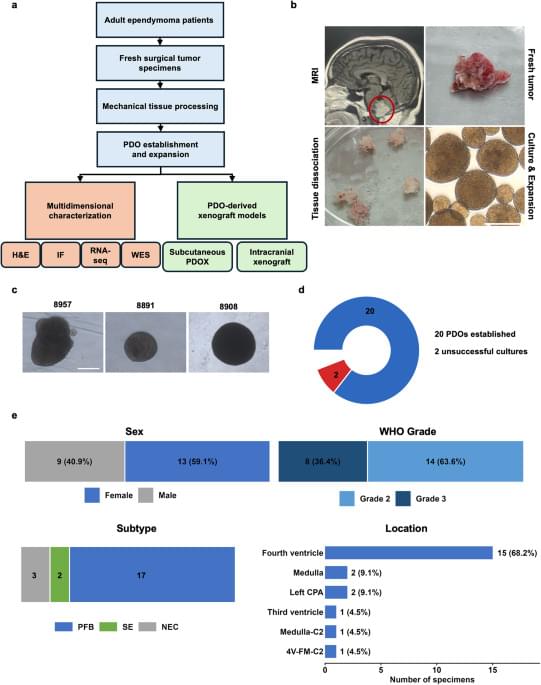
Fresh surgical specimens from 22 adult patients with EPN were processed for PDO establishment. Tumor–PDO fidelity was assessed by histology and immunofluorescence. Three matched tumor–PDO pairs underwent RNA sequencing followed by paired differential-expression, gene-set enrichment, microenvironmental signature, and ESTIMATE analyses. Selected PDO models were further evaluated by subcutaneous and intracranial xenografting.
PDOs were successfully established from 20 of 22 specimens (90.9%). Established PDOs broadly retained parental tumor morphology and expression of major ependymoma-associated and neural/progenitor markers. Selected morphologic and immunophenotypic features remained detectable during prolonged culture. Transcriptomic profiling of three matched tumor–PDO pairs demonstrated high global expression similarity (Pearson r = 0.84–0.88) together with substantial culture-associated remodeling. Endothelial signatures and ESTIMATE-derived stromal scores were reduced in all three PDOs, whereas other immune and stromal signatures showed patient-specific changes. Paired transcriptomic analysis further identified enrichment of ribosome/translation and oxidative-phosphorylation programs in PDOs, accompanied by reduced cilia-and axoneme-associated programs. Selected PDO-derived models demonstrated tumorigenic capacity in subcutaneous and intracranial settings.