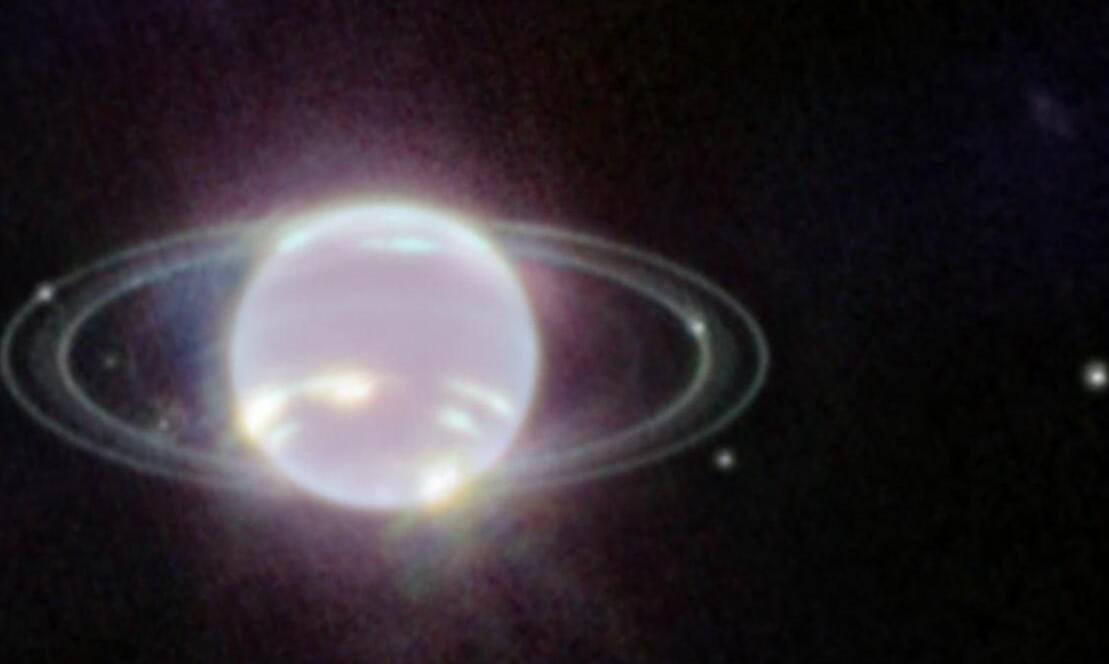
Neptune’s tiny moons may be ancient wreckage, preserving material exposed when a catastrophic event shattered much larger icy worlds.
In 1989, Voyager 2 discovered six previously unknown moons around Neptune. Five of them are tiny satellites that travel just beyond the planet’s main rings. Their small size and great distance from Earth have made them especially difficult to study in detail.
Now, NASA’s James Webb Space Telescope (JWST) has given scientists a much closer look. A Caltech-led team examined Neptune’s rings along with three of its moons, Larissa, Galatea, and Proteus, and found that their composition appears unlike that of other known bodies in the outer solar system.