When landfills and wastewater treatment plants create methane as a byproduct, much of it is simply burned and its value is lost. But the gas is an energy-rich resource that could be recycled as a fuel, chemical feedstock or bioproduct. Capturing and converting waste methane offers an opportunity to recover energy and create useful products from an otherwise wasted gas stream.
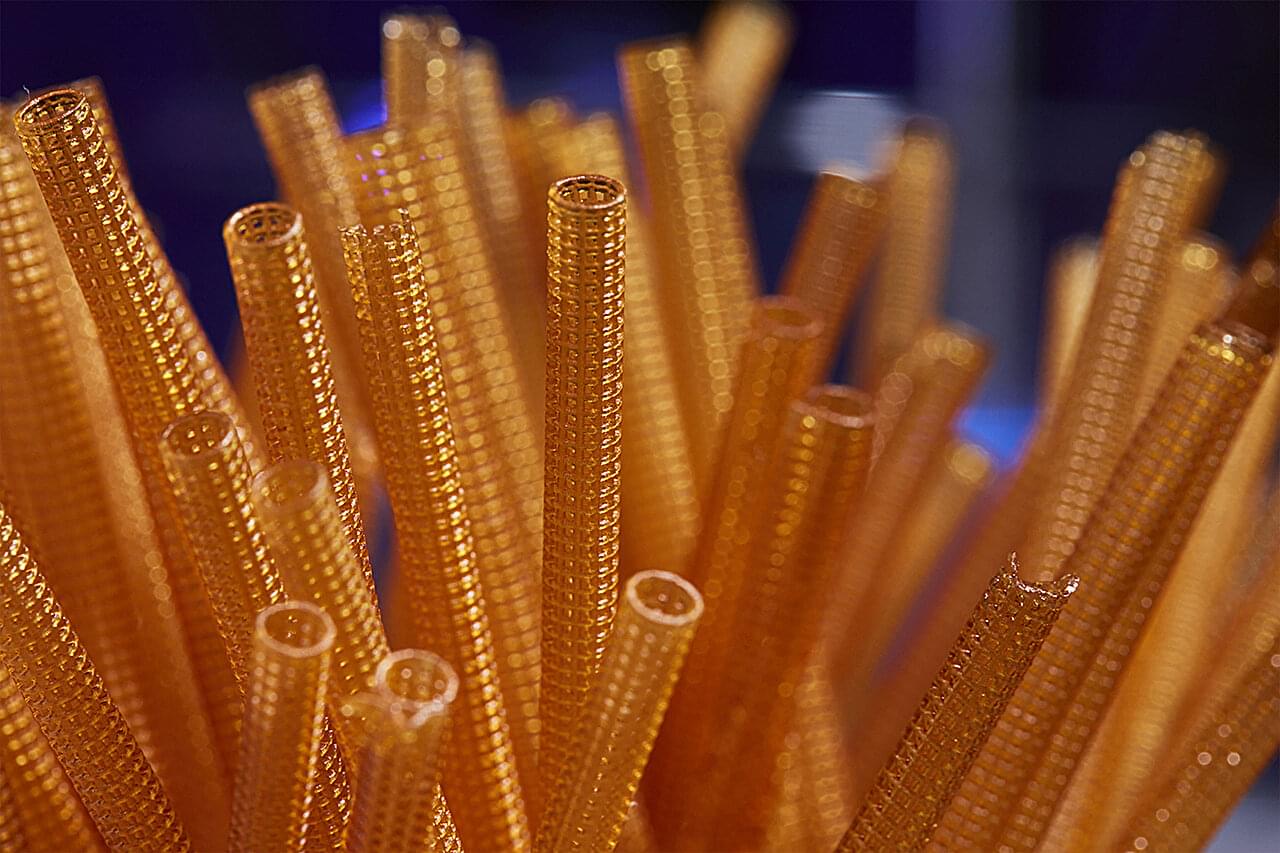
To harness that resource, researchers at Lawrence Livermore National Laboratory (LLNL) have developed a solid-state bioreactor that can convert methane into succinate, a valuable chemical used to make polymers, stabilize drugs, enhance food flavor and more. The small, efficient bioreactor performs more than 10 times better than conventional liquid-state systems—and it consumes less power.
“Bioproduction using poorly soluble gases has long been limited by slow mass transfer and low efficiency because conventional liquid-phase bioreactors are not well suited for gas fermentation,” said LLNL scientist and corresponding author Fang Qian. “With growing interest in recovering energy and valuable products from waste gas streams, new bioreactor technologies designed specifically for gas fermentation are greatly needed.”