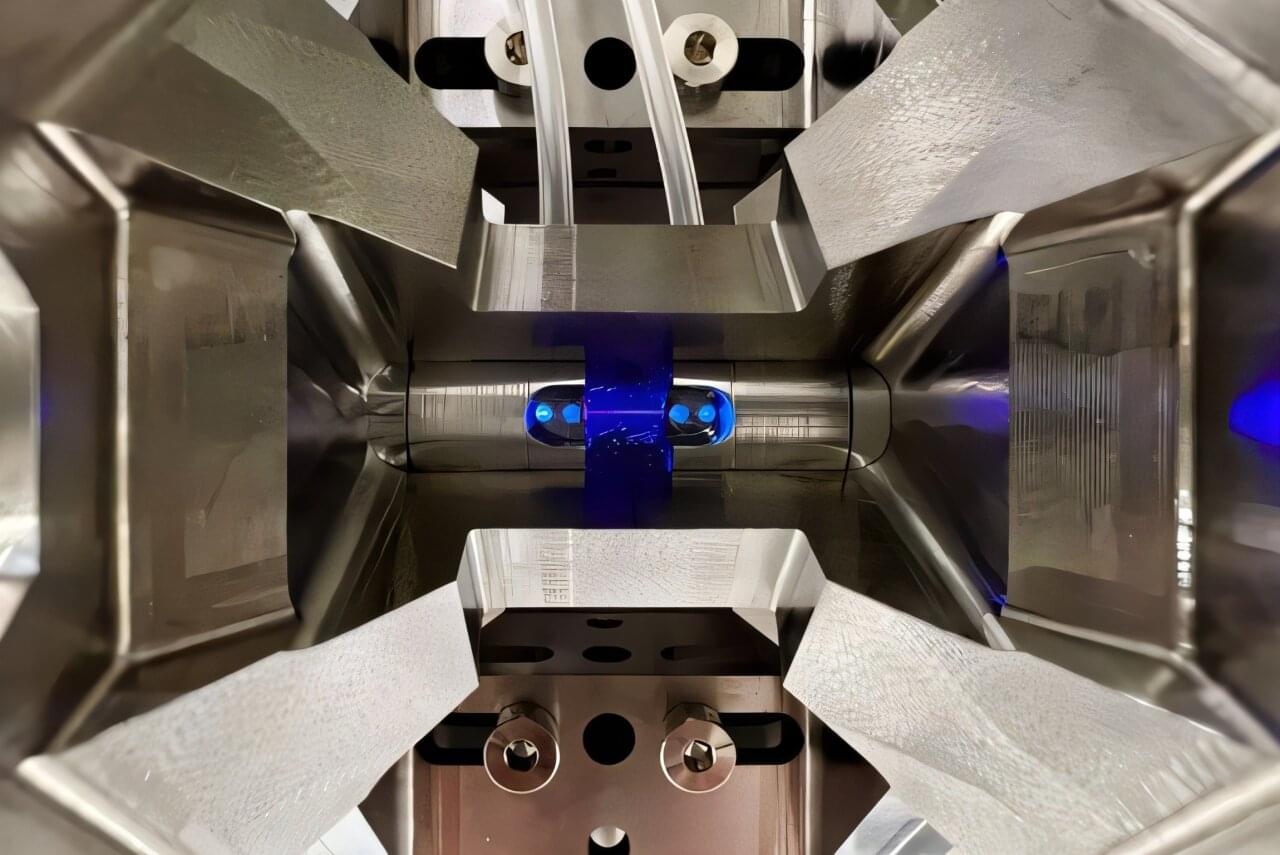
When certain atoms are irradiated with laser light, they can produce a very different kind of laser light: laser pulses with extremely high frequencies in the X-ray range. These laser pulses, which helped achieve record-breaking results at TU Wien in the 1990s, were the subject of the 2023 Nobel Prize in Physics.
However, the theoretical model of this effect makes a clear prediction: There is an upper limit to the energy, depending on the properties of the laser beam directed at the atoms. Above a certain value, known as the energy cutoff, hardly any X-rays are produced.
Now, however, a new experiment jointly performed by teams at TU Wien and the University of California San Diego has succeeded in overcoming this textbook cutoff rule: Using helium atoms, the researchers reached a much higher energy range than standard theory would allow. The reason lies in the interaction between the two electrons in the helium atom: They can release their energy simultaneously.