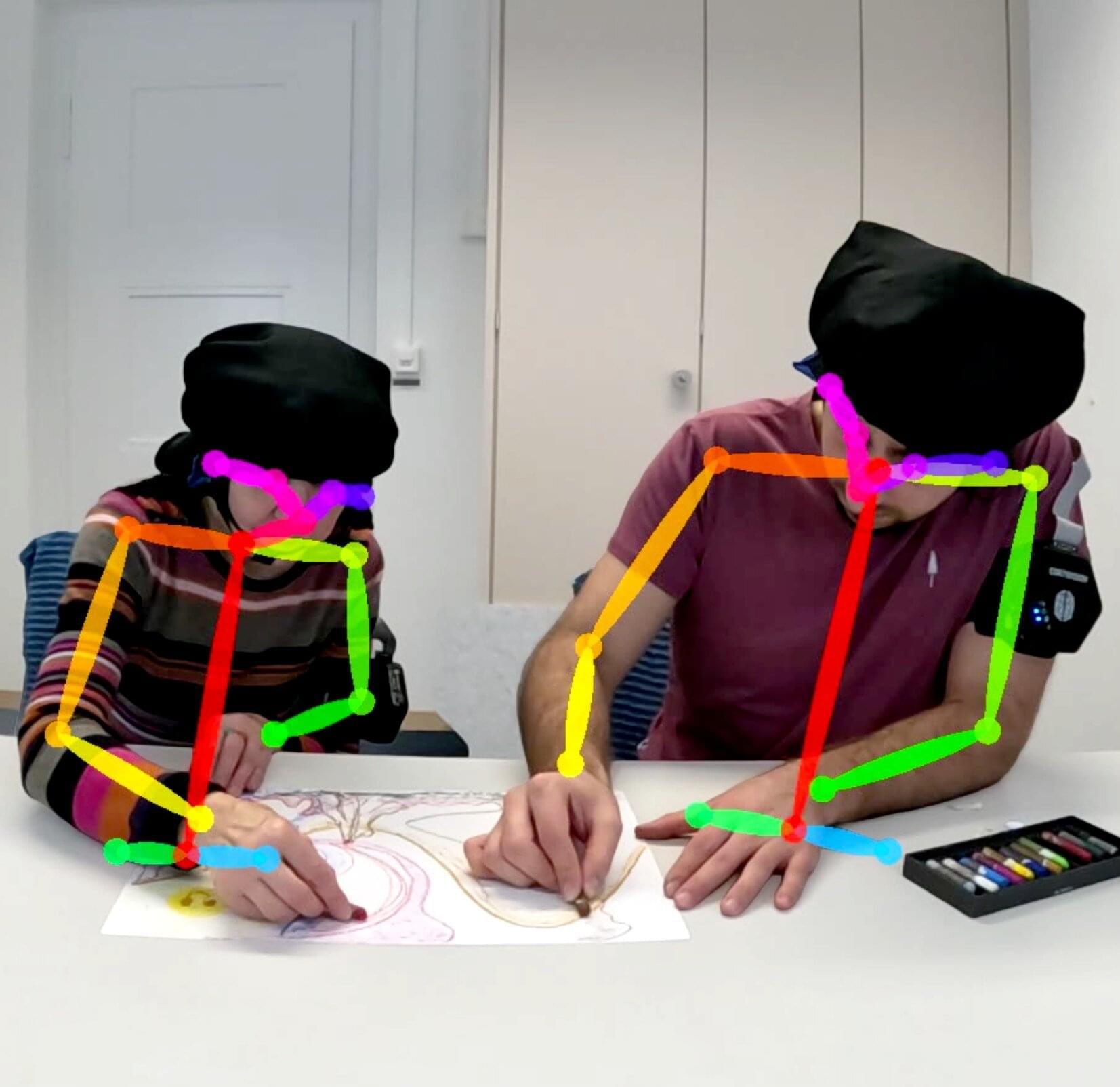
When people of different generations create art together, their brains initially show more synchrony, and the synchrony can predict feelings of loneliness or social connection, according to a study published Aug. 20 in the journal PLOS Biology by Ryssa Moffat from ETH Zurich in Switzerland and colleagues.
Loneliness—a perceived feeling of social isolation—is a growing health risk. Policymakers and health practitioners are working on methods to create meaningful social interactions that bring people together, especially between generations. But while intergenerational interactions can increase well-being in older adults, the physiological changes resulting from them are unknown.
To better understand changes in the brain that might come as intergenerational relationships are formed, the authors of this pre-registered study collected data from 31 intergenerational pairs, recruiting adults older than 70 and pairing them with adults between 18 and 35, and comparing them with 30 same-generation pairs of younger adults.