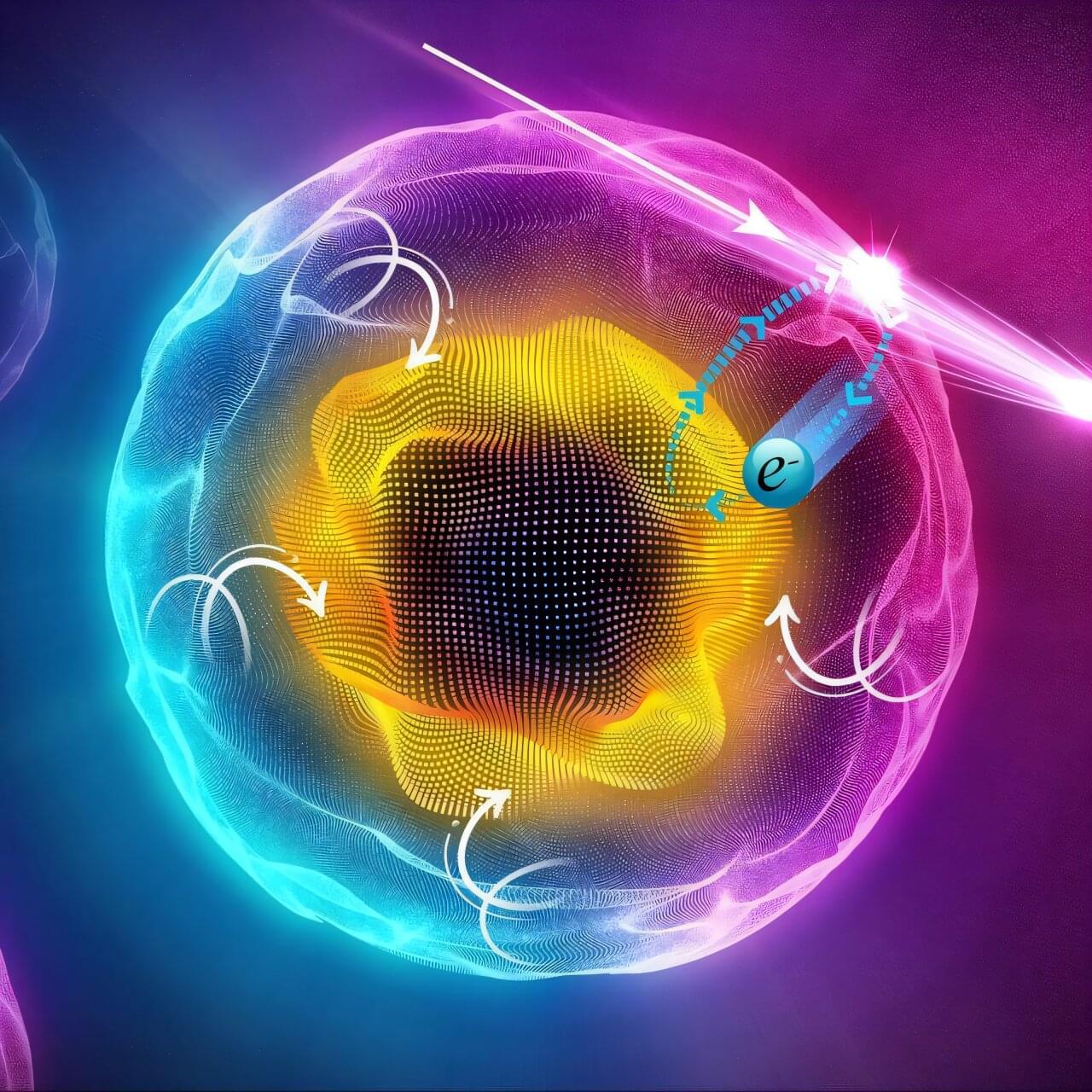
The interaction between X-rays and matter can be actively controlled, according to an international research team led by the University of Hamburg and SLAC National Accelerator Laboratory that has succeeded in producing bright X-ray images with significantly less damage. In an article published in Nature Communications, the researchers report using ultrafast pulses that partially reverse the damage they generate.
X-rays are ionizing radiation and can damage virtually all matter. That is why radiologists strive to keep the X-ray dose in imaging as low as possible. At the same time, they must ensure the image is bright enough and contains sufficient detail for diagnosis. This trade-off has shaped X-ray imaging for decades.
Researchers who want to image chemical reactions in individual molecules and nanoparticles face a far more extreme version of the same problem. To capture something as small and fleeting as a reaction within a cluster of atoms, they must illuminate the sample with a large number of X-ray photons in an extremely short burst. The most advanced tools for this—X-ray free-electron lasers (XFELs)—produce flashes short enough to “outrun” the physical destruction of the sample.