Quantum errors are a normal part of quantum computing because fragile physical qubits (the tiny components storing data) can easily break down because of environmental noise, like heat, stray signals or microscopic vibrations. Typical fixes involve vast amounts of extra hardware qubits, which make computers larger, more expensive and harder to build.
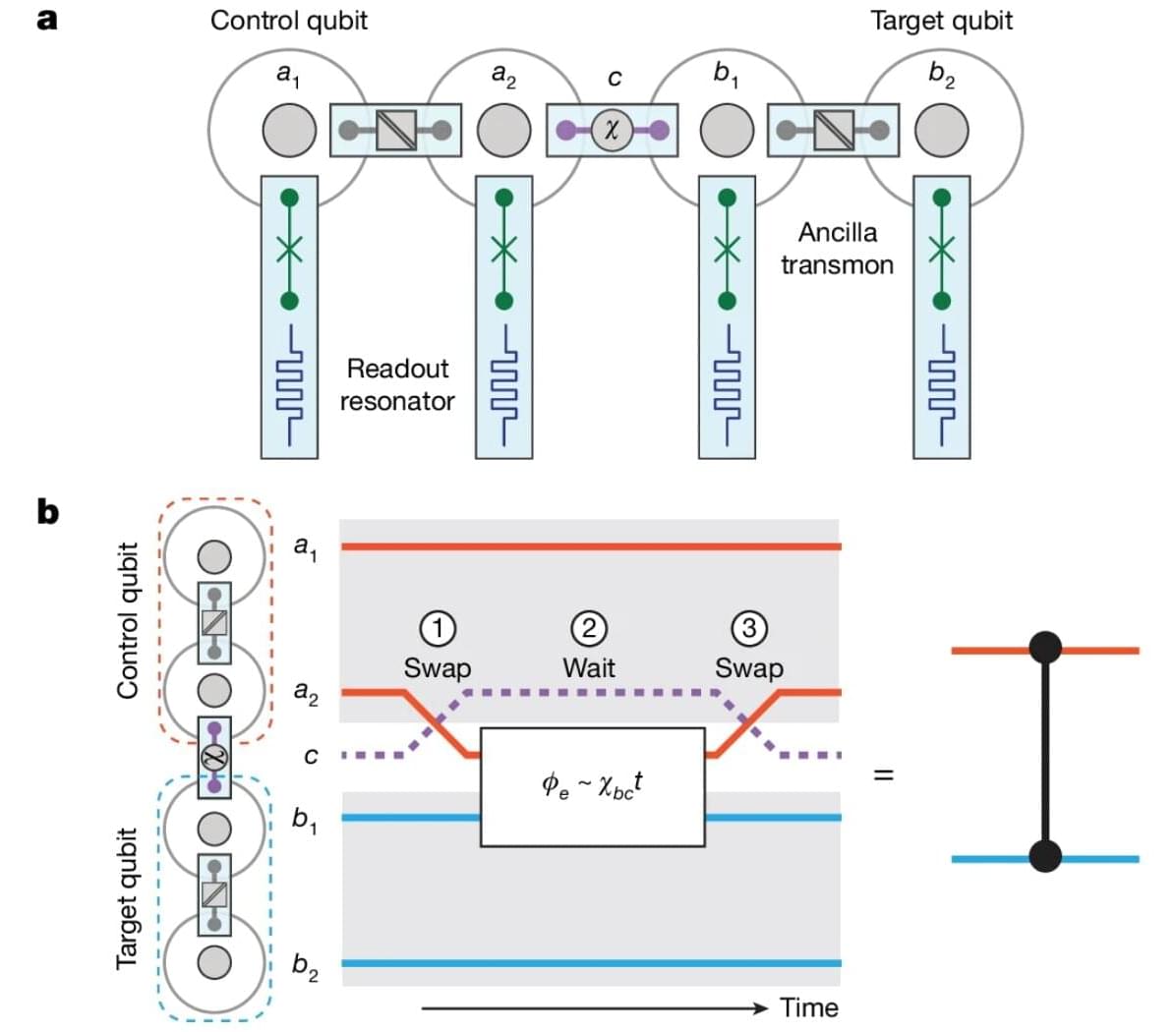
In a paper published in the journal Nature, scientists report developing a two-qubit entangling gate that automatically flags its most common errors as they occur.
The team at D-Wave Quantum Inc. engineered an ultrafast link, called a controlled-Z (CZ) entangling gate, that entangles two qubits in just 500 nanoseconds. When errors occur, the system automatically flags most of them as photon losses (known as erasures) instead of letting them turn into hidden glitches.