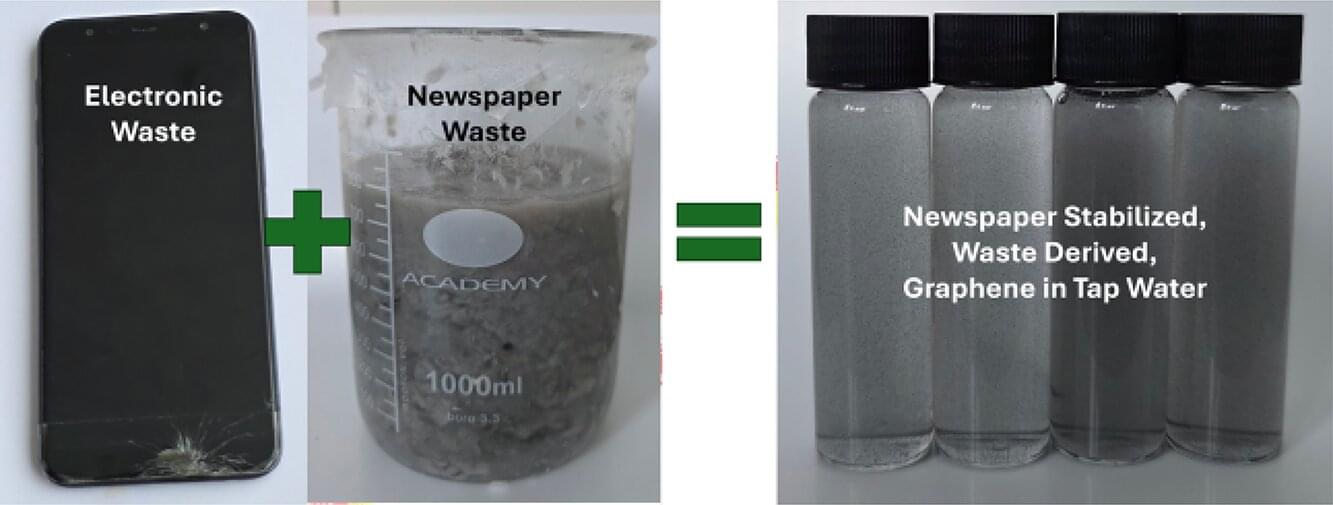
There is something slightly ridiculous about using a kitchen blender to make graphene. This is, after all, the “wonder material” associated with futuristic technologies. You might reasonably expect its production to involve equally futuristic equipment. Often, it does.
Producing graphene in liquid form can rely on purified graphite (better known to many as the “lead” in pencils), specialized solvents or additives, ultrapure water and carefully controlled processing. Our latest research, published in ACS Sustainable Resource Management, asked what happens if you try to make it using things you’d find in your household.
Could you start with graphite found in electronic waste, use old newspaper to help hold it in a liquid, mix everything in ordinary tap water and still end up with useful graphene?