In a tale of identities as divergent as “The Prince and the Pauper,” a well-known cancer-causing gene also influences cells in a zombie-like state meant to prevent cancer.
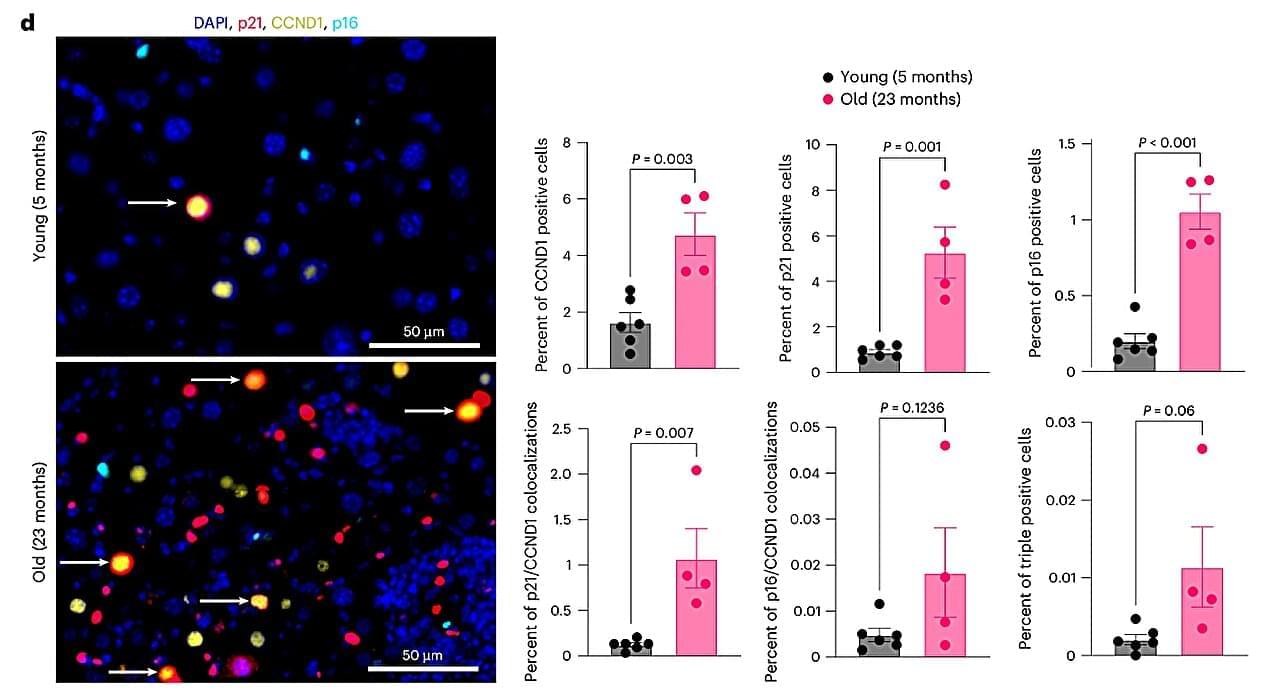
Scientists at Sanford Burnham Prebys Medical Discovery Institute and an international team of collaborators published findings Aug. 20, 2026, in Nature Aging that unpack this biological paradox, showing that this cell proliferation gene played a distinct role in cells that no longer proliferate. It served as a driver of chronic inflammation linked to age-related disease, making it a promising target for future therapies to reduce sustained inflammation and promote healthier aging.
The code for producing the protein cyclin D1 is carried by the gene CCND1. This gene made waves in the field of oncology in the early-to mid-1990s when overexpressing it was shown to cause cancer. Normally, cyclin D1 governs the activity of signaling molecules needed to push cells along the cell cycle toward replicating their DNA and dividing to make new cells. This process goes haywire and becomes hyperactive in cancer, but it is nonexistent in zombie-like senescent cells.