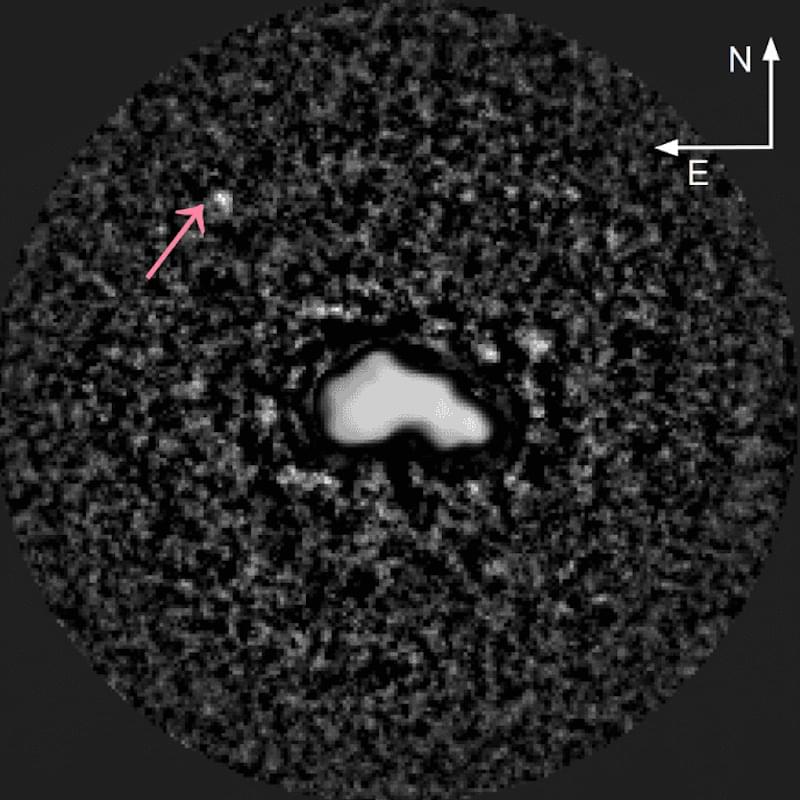
What shape is an asteroid? For (44) Nysa, the honest answer until now has been that nobody knew. It is one of the brightest and largest E-type asteroids in the main belt, a class with a surface rich in enstatite, and its oddness has made it a favorite target for well over a hundred years. Successive observations hinted that it was elongated, perhaps even two lumps stuck together, but the picture stayed frustratingly blurred.
An international team led by Kate Minker at Lowell Observatory has now brought two of the world’s heaviest instruments to bear on it: SHARK-VIS on the Large Binocular Telescope in Arizona, and SPHERE/ZIMPOL on the Very Large Telescope in Chile. With adaptive optics correcting for the churn of our atmosphere and purpose-built processing to sharpen what came back, they have produced the finest images of Nysa ever obtained. Minker describes them as close to spacecraft-quality, achieved without ever leaving the ground.
What those images show is two prominent valleys wrapping around the asteroid’s circumference. The team read them as necks, the pinched joints where separate bodies have come to rest against one another: Three lobes, gently welded into one.