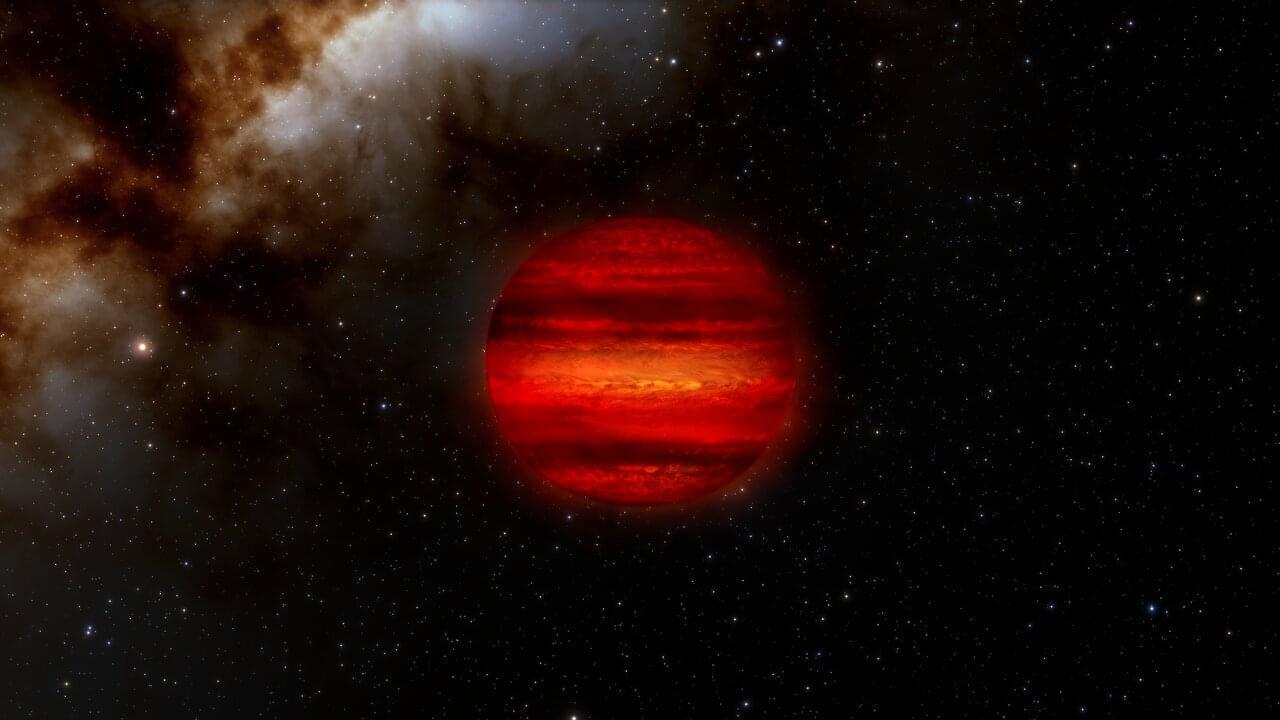
For decades, astronomers lumped brown dwarfs into a single category defined by mass alone—too big to be classified as planets but too small to become stars. However, this definition ignores the two very different mechanisms that can form them: the direct collapse of gas clouds and formation within the accretion disks of massive stars.
Through a new analysis of NASA’s Transiting Exoplanet Survey Satellite (TESS), astronomers led by Nino Ephremidze at Harvard University have made the clearest observation to date of a brown dwarf in orbit around a massive, aging star, potentially offering important new clues about how these planet-like bodies form. Their results have been posted to the arXiv preprint server.