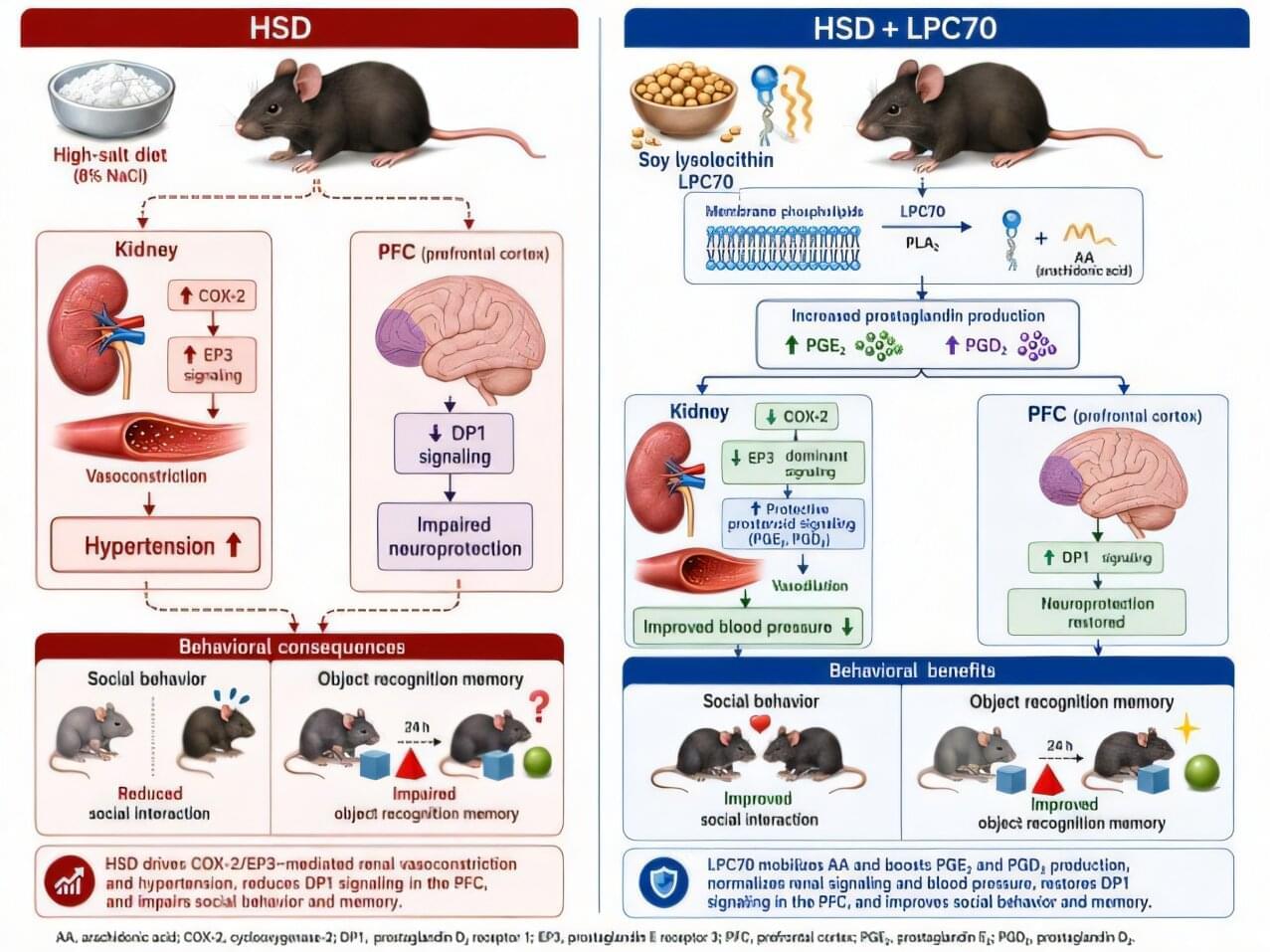
High-salt (HS) intake is a major global health concern, closely linked to hypertension and growing evidence of cognitive and emotional decline. Although salt is a routine part of daily diets, long-term overconsumption can negatively affect both the cardiovascular system and the central nervous system, underscoring the need for practical dietary strategies to mitigate these adverse health effects.
Prostaglandins (PGs) are lipid compounds derived from arachidonic acid (AA) that act as potent local hormones. They maintain cardiovascular homeostasis through a delicate balance of vasodilation and vasoconstriction. In the brain, depending on the receptor involved, PGs can promote either neuroprotective or neurotoxic signaling, thereby influencing emotional and cognitive function.
LPC70, a soy lysolecithin in which lysophosphatidylcholine (LPC) comprises more than 70% of phospholipids, has previously been shown to attenuate high-salt diet (HSD)-induced hypertension and cognitive impairment. However, the biological mechanisms, specifically the role of LPC70 in regulating PG signaling, remain unclear.