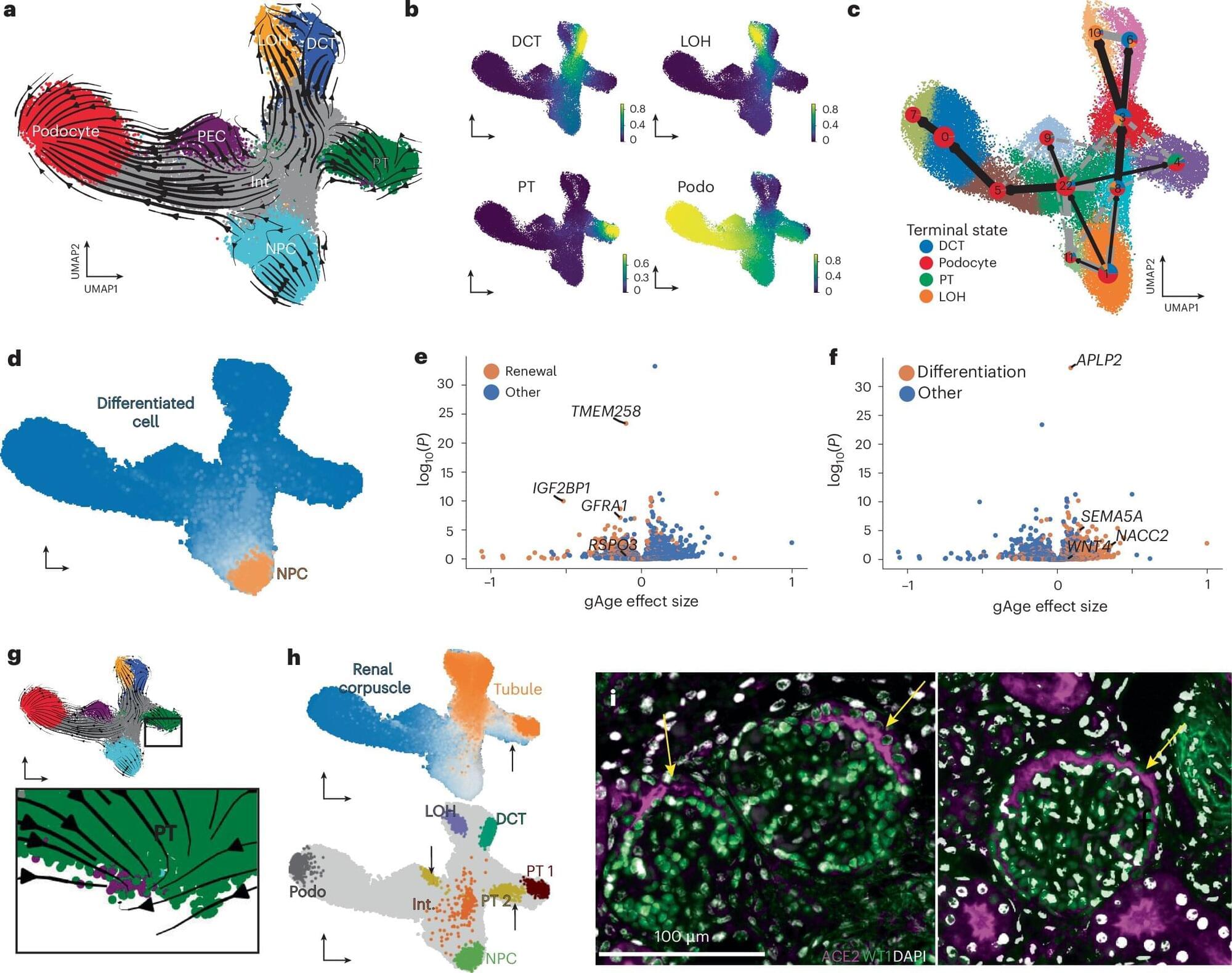
A human kidney is built once, before birth, and the rules guiding its construction have been largely inferred from animal models. Researchers at Penn Medicine have now read those rules directly in human tissue. They found that developing cells are steered by soluble signals released by their neighbors—and identified insulin-like growth factor 2 (IGF2) as a key signal that sustains the kidney’s stem-like cells.
Their study is published in Nature Genetics and was conducted by the Penn-CHOP Kidney Innovation Center, a research collaboration between the Perelman School of Medicine and Children’s Hospital of Philadelphia, working with bioengineers from Penn’s School of Engineering and Applied Science and the Institute for Regenerative Medicine.
How well a kidney is built before birth matters for the rest of a person’s life. Healthy people are born with anywhere from 200,000 to 2 million nephrons—the microscopic filtering units that clear waste from the blood—and no more are made after birth. A low nephron endowment carries a higher lifetime risk of high blood pressure and chronic kidney disease, and severe disruptions of kidney formation are the leading cause of chronic kidney disease in children.