While quantum computing could be the future, it is currently plagued by finicky hardware. To make the technology practical, researchers must demonstrate that it consistently and continuously works and performs at scale. In a new study, published in Physical Review Letters, researchers at Lawrence Livermore National Laboratory (LLNL) and the Ion Storage Group at the National Institute of Standards and Technology in Boulder, Colorado, created a robust process for entangling trapped-ion qubits. The result means better building blocks for ion-based quantum computers.
The approach creates a physical link between two trapped ions. Those ions are held in place with an electric field, although they do vibrate naturally. Because they have the same charge, they also repel each other. If one ion moves, it nudges its neighbor.
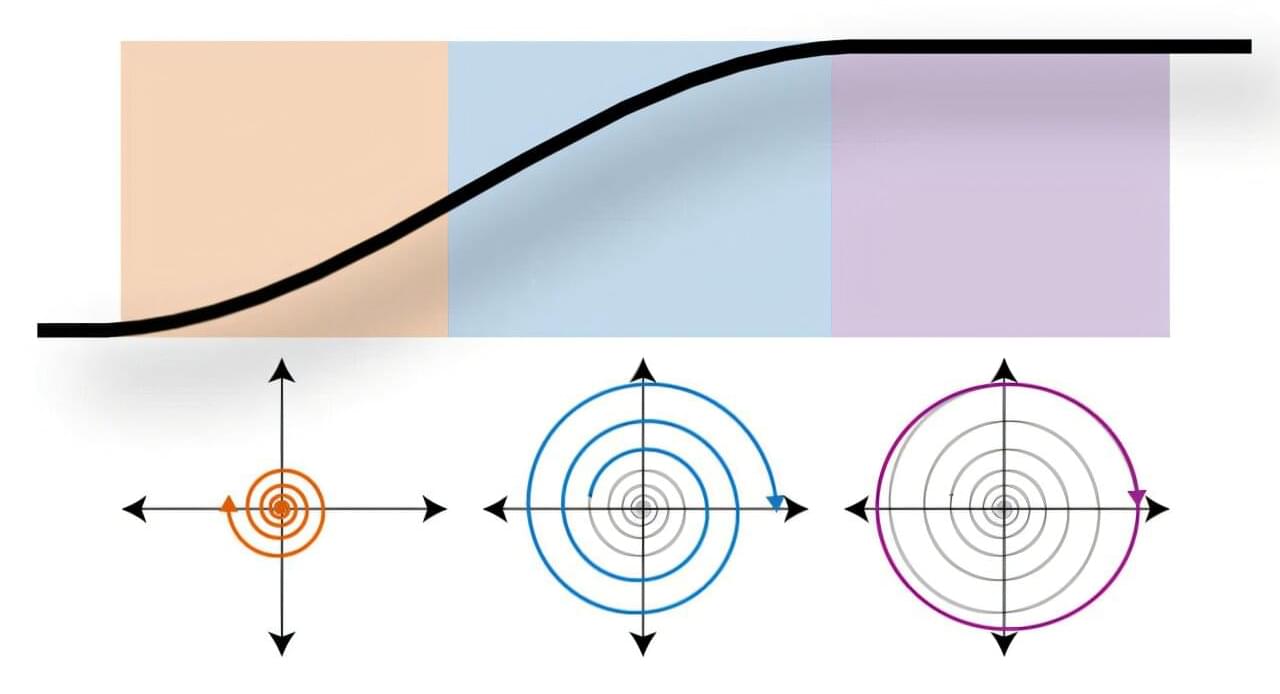
That shared motion can be used as a messenger between the qubits. In this experiment, the team used radio-frequency and microwave electromagnetic fields to apply a force to the ions. In different quantum states—say, when the qubit is pointing up versus down—the force pushes the shared-ion motion in a slightly different way.