In the coming years, increasingly larger and more powerful quantum systems are expected to tackle problems that are difficult or impossible to solve using conventional computers. However, the more powerful quantum simulations become, the more difficult it is to independently verify their results. Where classical simulation is still feasible, results can be cross-checked directly; beyond that regime, other methods are needed.
Researchers led by Tristan Kraft of the Technical University of Munich and Peter Zoller of the University of Innsbruck and the Institute for Quantum Optics and Quantum Information at the Austrian Academy of Sciences, together with Barbara Kraus of the Technical University of Munich, have now demonstrated how a quantum simulator can be experimentally characterized and how the uncertainties that arise in the process can be translated into quantitative error limits for its results.
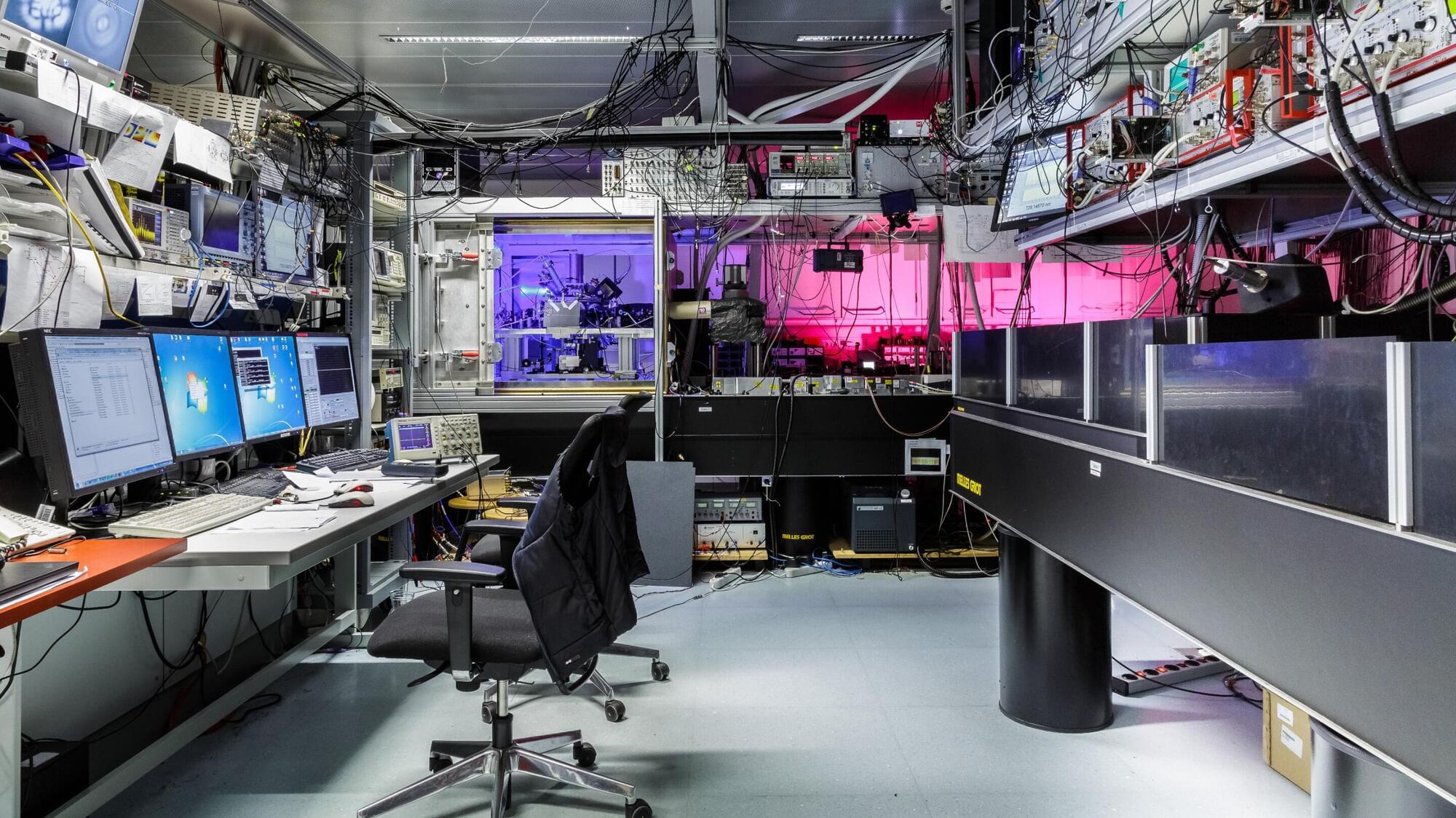
The approach was demonstrated by a team led by Manoj Joshi and Christian Roos using an ion-trap quantum simulator containing up to 51 ions.