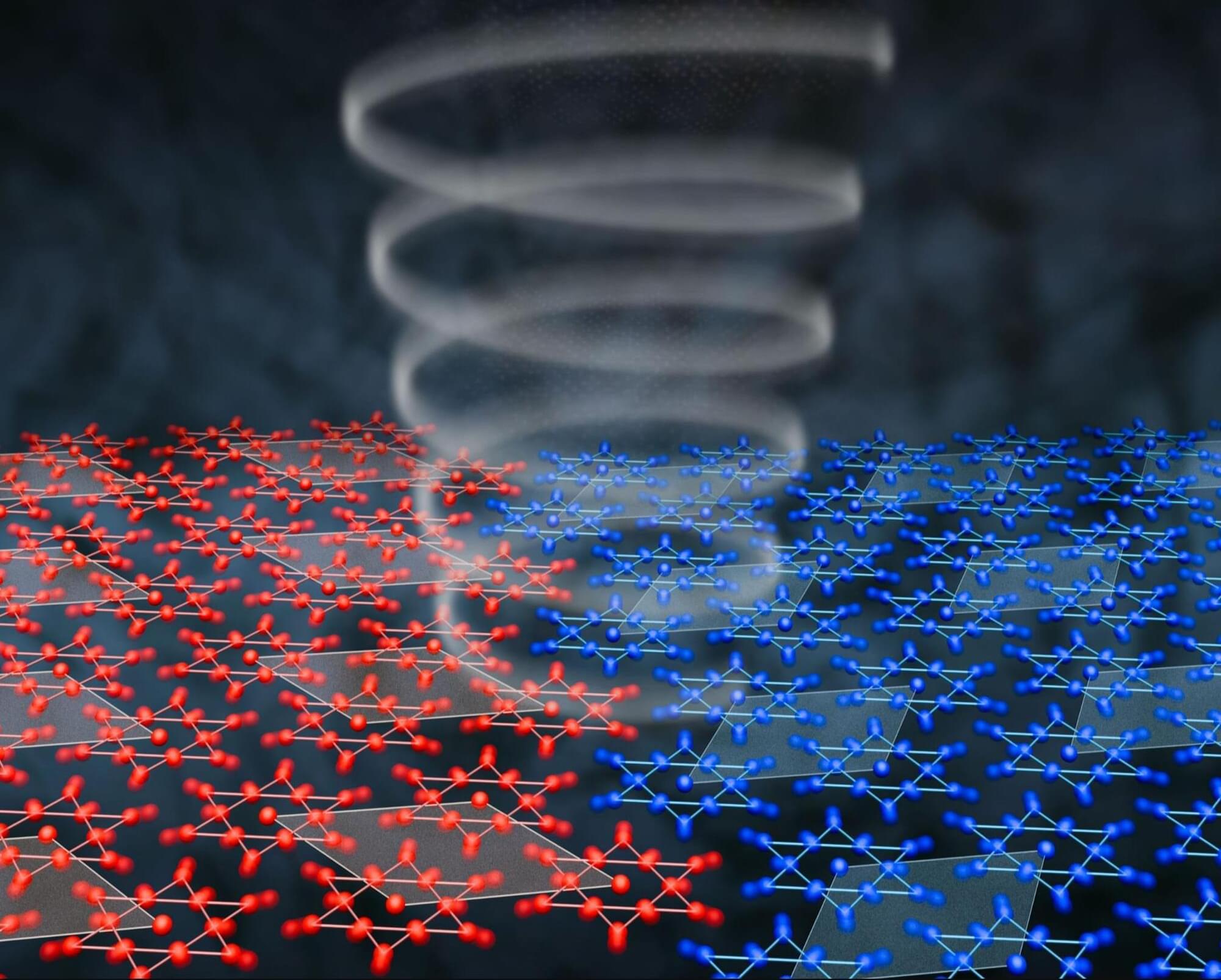
Electronic fluctuations can act as a resonant bridge between normally separate crystal vibrations, offering a new route to study and control ferroaxial quantum states.
Symmetry is a basic rule of the natural world. It explains why some objects appear the same after they are rotated, reflected, or changed in other ways. In materials, symmetry helps determine how atoms and electrons are positioned and how they move together. It can also block certain collective atomic motions (vibrations) from interacting, meaning some motions are normally unable to influence one another. But a new study asks whether those limits are always fixed.
A study published in Nature Physics suggests that some of these restrictions can be loosened. Researchers from the University of Texas at Austin and the Max Planck Institute for the Structure and Dynamics of Matter (MPSD) in Hamburg found that electronic fluctuations can create a dynamic connection between vibrations that symmetry would usually keep apart. Led by Edoardo Baldini’s group at UT Austin, the work shows how light, vibrations, and electrons can become linked inside a ferroaxial crystal, a special material that may offer new ways to control quantum states with light.