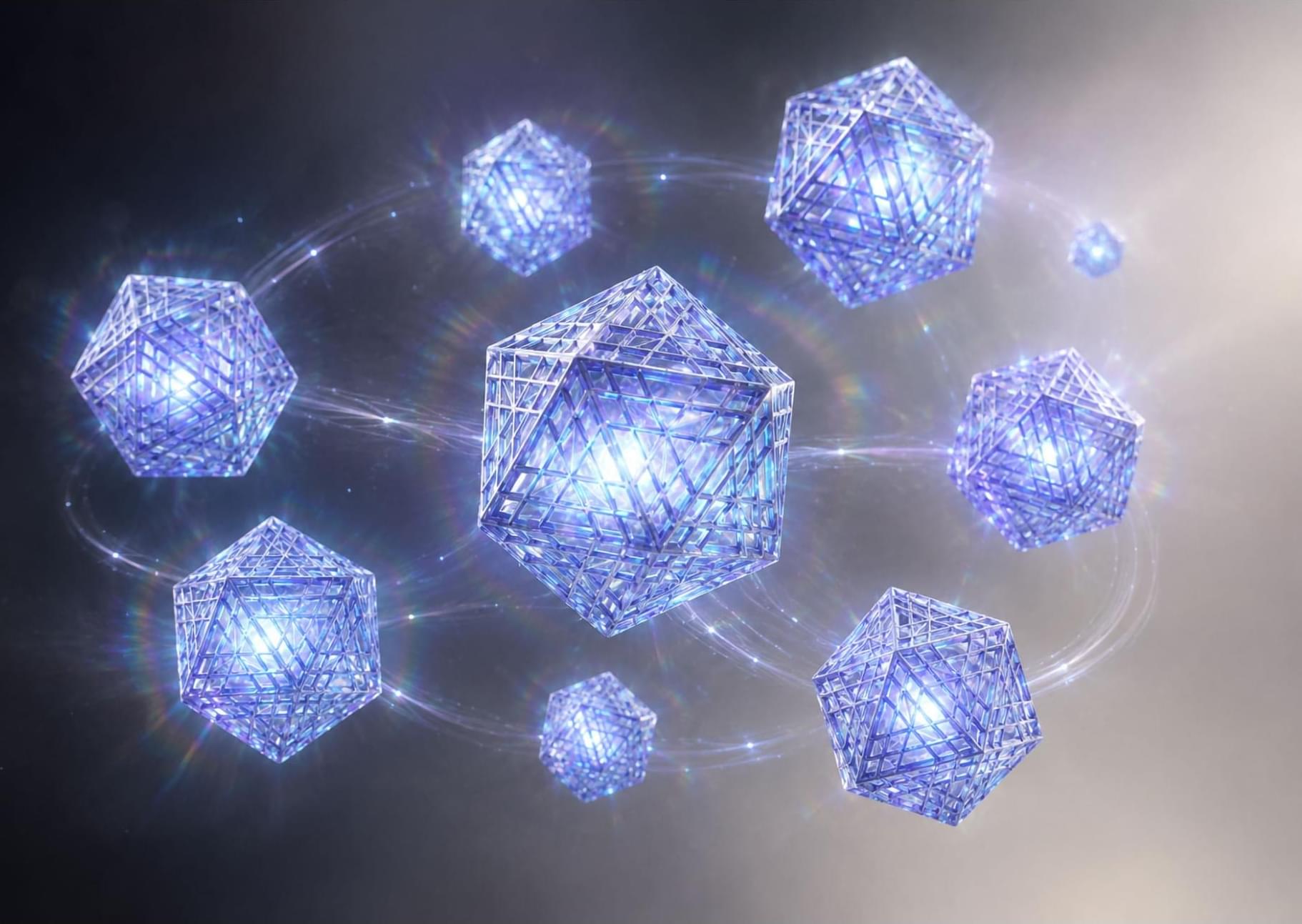
Separate time crystals inside a semiconductor can “find” each other across surprising distances and lock into the same rhythm.
Researchers at TU Dortmund University demonstrated the effect using a semiconductor system in which electron and nuclear spins form continuous time crystals. Their latest experiments, published in Nature Communications, reveal that spatially separated oscillators can lock to the same frequency even when they begin with different rhythms.
The finding builds on the team’s earlier demonstration of an unusually robust continuous time crystal in a semiconductor. That system produced persistent electron-nuclear spin oscillations with coherence lasting for hours, giving the researchers a stable platform for exploring what happens when several time crystals occupy the same material.