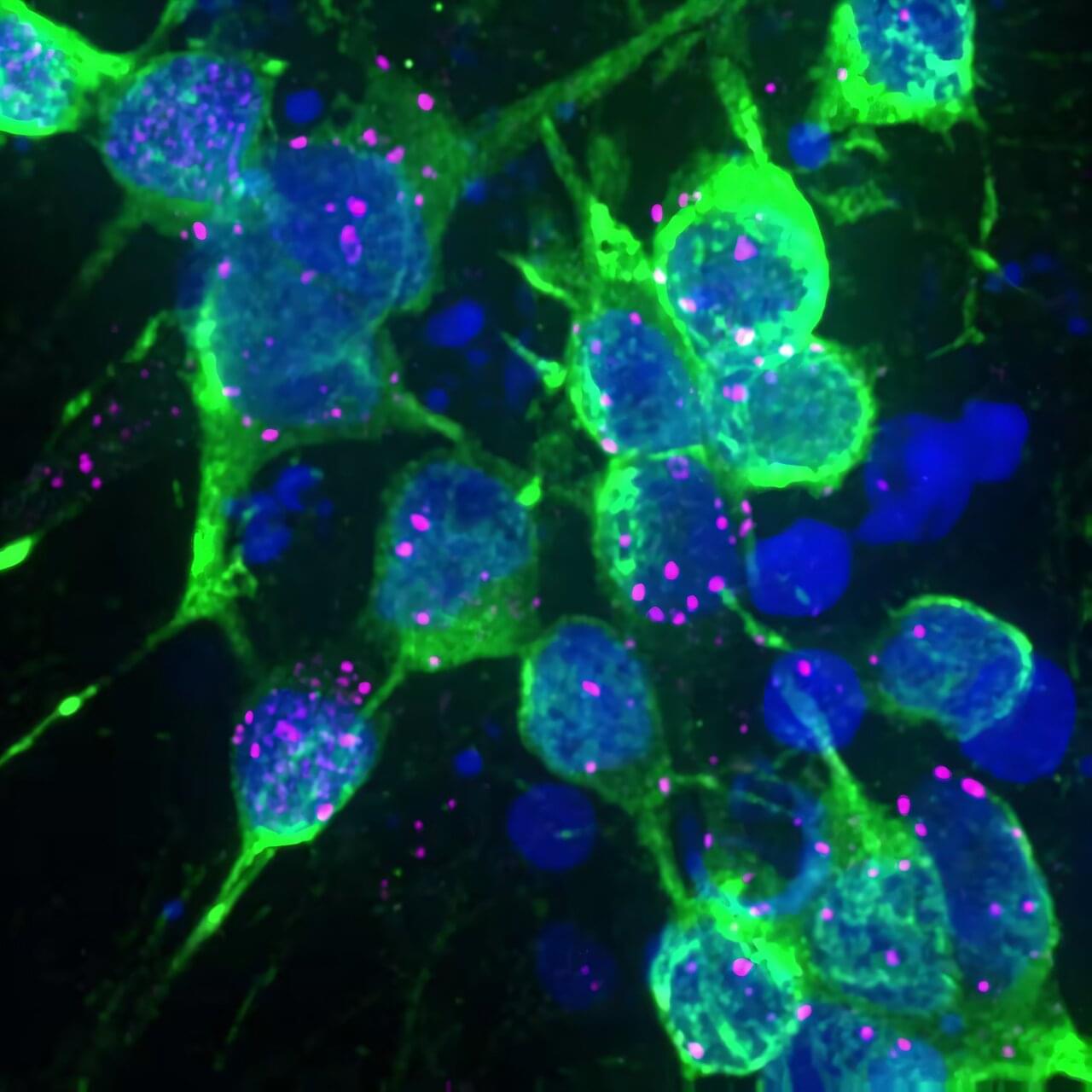
Parkinson’s disease affects more than 10 million people worldwide. The disease is characterized by the buildup of abnormal clumps of the protein alpha-synuclein inside brain cells, but scientists have long struggled to understand exactly how these toxic forms of the protein cause neurons to malfunction and eventually die.
Researchers from the Tofaris lab, part of the Nuffield Department of Clinical Neurosciences and based in the Kavli Institute for Nanoscience Discovery, combined advanced molecular analyses of human stem cell models of Parkinson’s disease with studies of postmortem brain tissue from people with Parkinson’s disease to investigate the earliest stages of the disease process.
The study is published in the journal Nature Communications.