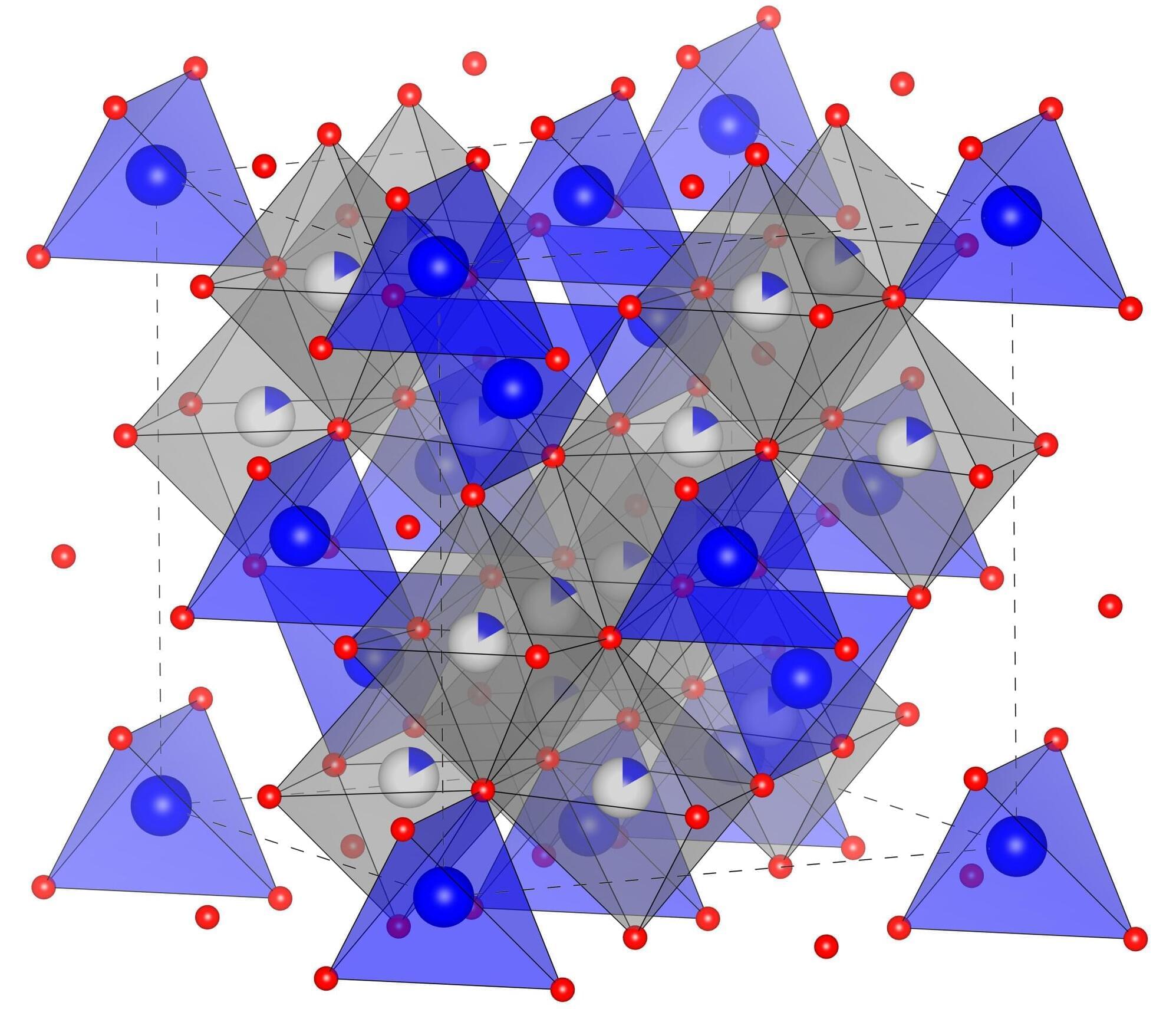
Lithium titanate (LTO, Li4Ti5O12) is a well-established battery material that in its pristine state is a poor conductor of lithium ions. It develops high ionic conductivity only during charging, when additional lithium ions and electrons are incorporated into the material.
Bernhard Gadermaier and Martin Wilkening from the Institute of Chemistry and Technology of Materials at TU Graz have taken an entirely different approach: They transformed pure, non-lithiated LTO in its original composition, Li4Ti5O12, into a significantly better ion conductor by deliberately introducing defects into the crystal lattice.
Specifically, they removed individual oxygen atoms, thereby creating oxygen vacancies that activate a previously blocked migration pathway for lithium ions. “This diffusion pathway is already pre-formed in the LTO structure but is only activated by the defect structure,” Wilkening explains.