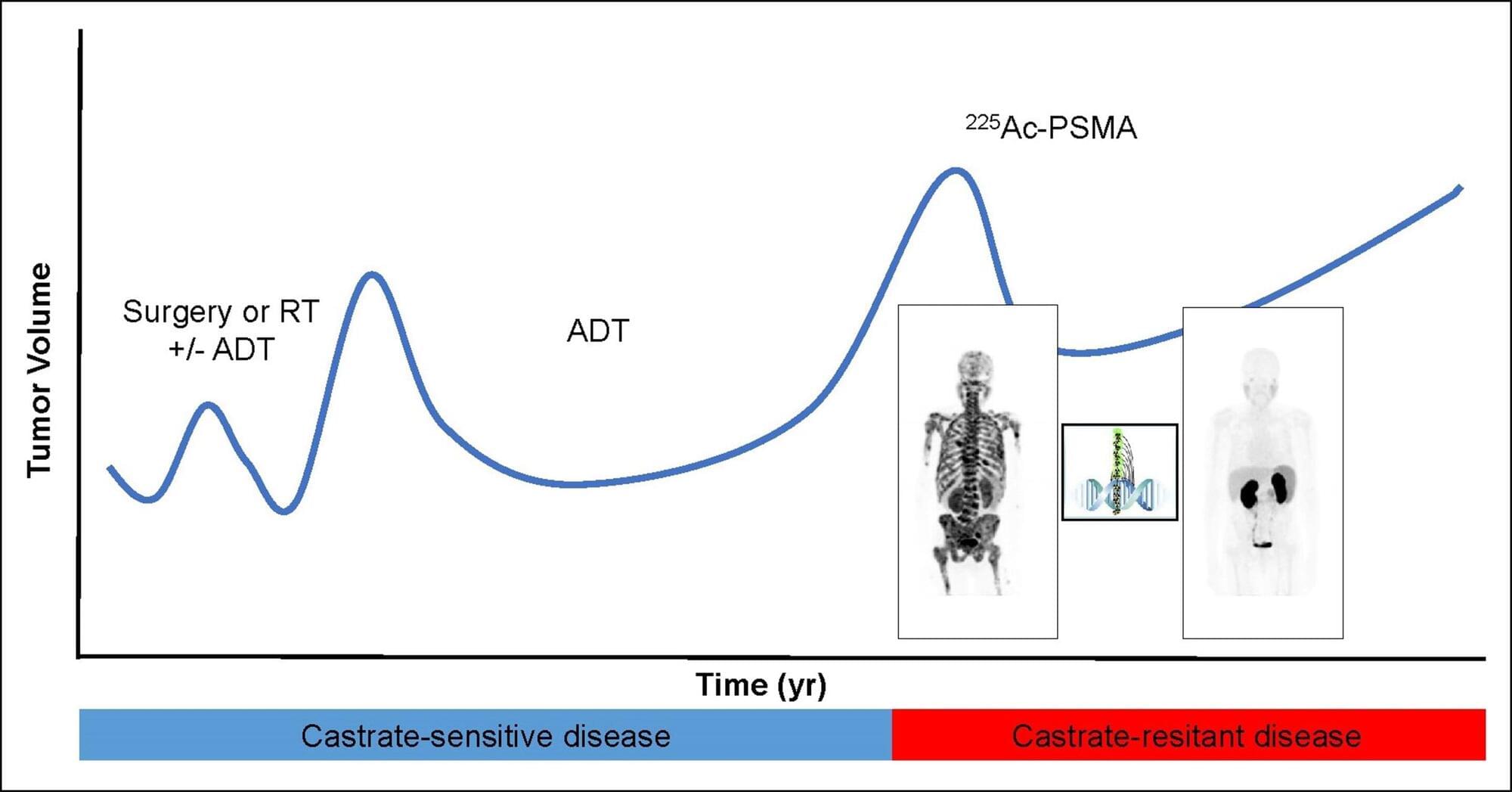
A novel prostate cancer treatment—225 Ac-PSMA-617 radioligand therapy—has been shown to increase the progression free survival (PFS) and overall survival (OS) of metastatic castration-resistant prostate cancer (mCRPC) patients, according to research published by The Journal of Nuclear Medicine. Ninety-one percent of patients experienced a greater than 50% reduction of their initial PSA (prostate specific antigen) value after treatment with 225 Ac-PSMA-617, resulting in a PFS of 22 months and an OS not yet reached at the conclusion of the study.
While the five-year survival rate of localized prostate cancer is nearly 100%, for mCRPC patients it is only 30%. Clinical studies have demonstrated the efficacy and safety of several therapies, including 177 Lu-PSMA in the post-androgen deprivation therapy (ADT) setting in patients with mCRPC. Additional therapies, such as 225 Ac-PSMA-617, are often considered once the disease begins to progress again.
“Previous research has shown a remarkable therapeutic efficacy of 225 Ac-PSMA-617 in heavily pre-treated mCRPC patients, as demonstrated by the initial work from Kratochwil et al. from Germany,” said Mike Sathekge, professor and head of the Nuclear Medicine Department at the University of Pretoria and Steve Biko Academic Hospital in Pretoria, South Africa. “In this study we sought to compare 225 Ac-PSMA-617 to other common post-ADT treatments, such as chemotherapy, enzalutamide, and abiraterone acetate or docetaxel, administered in a comparable setting.”